
Table of Contents
Brake caliper hooks support a removed caliper so its weight does not hang from the brake hose. The hook needs a secure attachment on the caliper and a suitable, stable support point nearby. Position the caliper so the hose remains relaxed and untwisted, and confirm that the arrangement will stay clear of the rest of the brake work.
Do not assume that any convenient hole, spring or bracket is a suitable hanger point. The vehicle's repair instructions and the hook's capacity matter. A hook solves the problem of temporarily supporting the caliper; it does not support the vehicle or make an otherwise unsafe brake-repair setup acceptable.
Plan the resting place before removing the last bolt
A caliper becomes awkward at exactly the moment its final attachment is released. Have the support method ready before that happens. Look at the hose route, the caliper's weight and the area you need clear for the next step. It is much easier to choose a position while the caliper is still attached than while holding it with one hand.
Check the caliper for a suitable point that will not damage a seal, rubber boot, connector or brake component. Check the nearby support for stability and suitability under the vehicle's procedure. The hook should seat securely without resting on a fragile edge or a part likely to move during the repair.
If the arrangement would require stretching the hose to reach, choose a different approved support method or position. The hose is not an extension strap. A position that is only just reachable may become unsuitable as the caliper rotates or the suspension changes position during the work.
Support the vehicle separately
Brake work often begins with raising the vehicle and removing a wheel. That stage needs the specified lifting and support points, suitable equipment and a stable surface. A hydraulic jack alone is not a secure working support. HSE's guidance on working under vehicles stresses proper support and the correct vehicle lifting points.
The caliper hook is a small accessory within that larger setup. Do not let its apparent convenience distract from wheel chocks, support equipment or the vehicle's service instructions. Nor should the hook be used to suspend a heavier assembly simply because it is made of thick wire. Its purpose and stated limits are specific.
Once the vehicle is properly supported, keep the surrounding work area clear. A hose, cable or air line brushing a suspended caliper can disturb it. Decide where the removed wheel and tools will go so you will not have to squeeze past the hanging caliper later.
Lower the caliper into support under control
Hold the caliper as its mounting is released. Guide it into the planned position and engage the hook while still supporting the weight by hand. Confirm that both ends are seated as intended before slowly transferring the load. A hook that appears engaged from above may be balanced on an edge when viewed from the side.
After the weight is transferred, inspect the hose from its fixed connection to the caliper. It should not be pulled taut, sharply bent, pinched or twisted. Also check any attached wiring or sensor lead. A relaxed hose can coexist with a stretched electrical cable, so look at the whole assembly rather than only the hydraulic line.
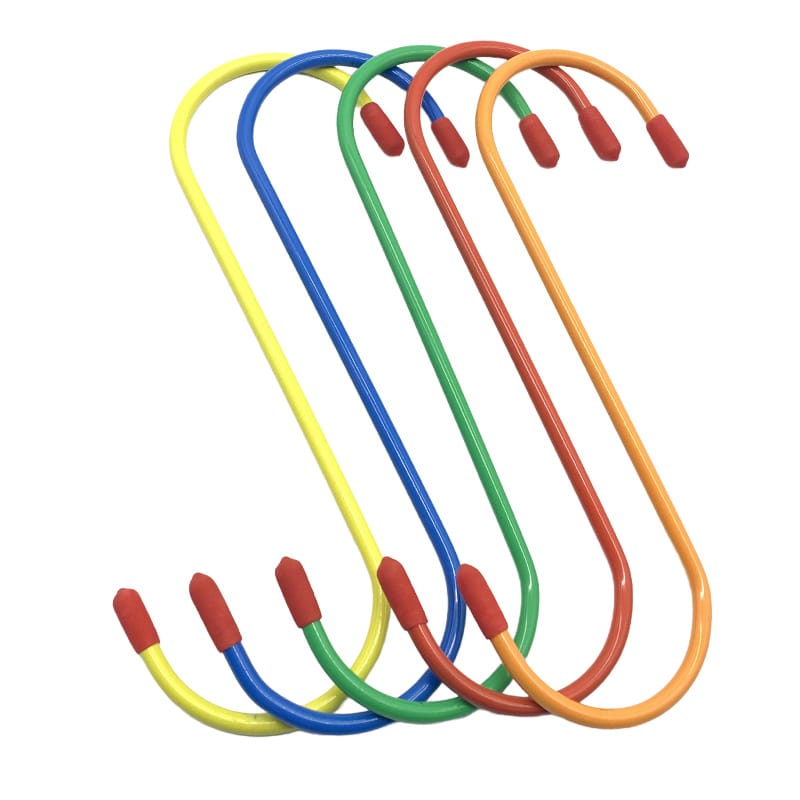
The curved ends on Automotive Brake Caliper Hooks show how a caliper hanger engages at two points. Their opening and reach affect fit, but appearance alone does not establish a load rating. Use the hook's stated application and instructions, and reject a setup that depends on a tip barely catching an edge.
A good hanging position leaves room for the next task
You may need to remove the disc, work on the bracket or clean an adjacent area. A caliper hanging directly across that path will have to be moved again. Choose a position that keeps it supported while leaving the intended work accessible, rather than simply placing it in the first reachable spot.
Think about which parts may move. A support point on a component that will be removed or repositioned is not a stable plan. If the repair involves steering or suspension movement, follow the vehicle procedure and reassess the caliper support before any movement changes the hose path.
Keep the caliper away from surfaces that could contaminate the pads or damage the piston boot. Do not let it rest against a sharp edge or swing freely into the bodywork. A hook should reduce uncontrolled movement, not create a pendulum beside the part you are trying to repair.
Three warning signs that the position needs changing
The first is visible hose tension. Even if the caliper feels light in your hand, its unsupported weight should not be carried by the hose. The second is a twisted hose, which can be easy to miss after turning the caliper to expose a bolt. The third is an unstable hook contact that shifts when the caliper is touched.
If any of those appear, support the caliper by hand before changing the hook. Do not tug the suspended assembly into a better position and hope the contact follows. Move deliberately, one support point at a time, keeping the weight controlled throughout.
A fourth practical clue is repeated interference with your tools. If you keep pushing the caliper aside to reach the disc, the location is wrong for the job. Reposition it using an appropriate support arrangement before continuing. It is easier to correct the layout now than to catch a falling caliper while holding another tool.
| Observation | Why it is a problem | Better action |
|---|---|---|
| Hose becomes straight and tight | It may be carrying unwanted load | Support the caliper and choose a closer position |
| Hose forms a sharp bend | Flow or hose condition may be affected | Restore the correct routing without twisting |
| Hook rests on its very tip | Engagement may be unstable | Find a suitable, fully seated attachment |
| Caliper swings into the work area | It can be struck or dislodged | Change the support location before continuing |
| Wire or connector is stretched | The support has ignored another attachment | Reposition with all attached lines in view |
Do not operate the brake with the assembly unprepared
With the caliper removed, avoid pressing the brake pedal or operating the parking brake unless the exact service procedure calls for it and the required restraints are in place. Unplanned piston movement can create a new repair problem. Let anyone nearby know that the brakes are being worked on so they do not operate a control casually.
If the job also requires retracting a piston, identify the correct method separately. The hook is a support device, not a reaction point for a wind-back tool. Electric parking-brake systems may require a service mode, and different calipers use different retraction arrangements. Keep that procedure distinct from the simple act of hanging the caliper.
Do not use the supported caliper as a convenient handle or leverage point while removing another part. The hanger arrangement should carry the intended caliper weight, not the additional force of another operation. If access is difficult, change the work plan rather than applying force through the suspended assembly.
Removing the hook is part of reassembly
Take the caliper's weight before unhooking it. Guide it back into the correct position without twisting the hose or trapping a wire behind the bracket. Confirm the routing against the service information, especially if the caliper has been turned during the job.
Use the specified mounting hardware and tightening procedure. The fact that a caliper sat securely on a hook says nothing about the correct torque for its bolts. Complete the required brake checks before moving the vehicle, including restoring normal pedal operation where the service procedure requires it.
Frequently asked questions
Can I let the caliper hang from its brake hose for a moment?
Support its weight instead. Prepare the hanger or other approved support before releasing the mounting so there is no need to use the hose as a temporary strap.
Is a wire coat hanger equivalent to a caliper hook?
Do not assume an improvised wire has suitable strength, shape or retention. Use a support method intended for the job and compatible with the caliper and vehicle instructions.
Can I hook onto any suspension spring?
No universal attachment point applies to every vehicle. Use a suitable stable point permitted by the repair procedure, with secure engagement and a relaxed hose route.
Does a thicker hook always hold more weight?
Thickness alone does not establish capacity. Material, shape, construction and the manufacturer’s stated application all matter.
Should the caliper stay on the hook while I use a piston tool?
Follow the specific service procedure. Do not use the hanger as a reaction point for extra force; the caliper may need a different controlled position for piston retraction.