
Inhaltsverzeichnis
A small cylinder hone needs room to enter, expand, move through the required working area and come back out. Matching the hole's diameter is only the first check. A tool can fit through the opening yet be too long for the bore, unable to pass a shoulder, or unsuitable for the cylinder's material.
This is particularly easy to overlook when shopping from a photograph. The head looks compact, but the picture says little about the space behind the opening. Before using the tool, work out what is inside the component and what surface actually needs treatment. That simple pause can prevent a broken stone, a damaged edge or an unsuitable repair.
Draw the bore from the side
A through-bore is open at both ends. A blind bore ends inside the component. A stepped bore changes size along its length. These descriptions matter because the tool's travel is limited by the internal shape, not just by the entrance. A stone that travels freely in an open sleeve may strike the bottom or run onto a shoulder in another part with the same diameter.
Do not assume that a dark area at the end is empty space. Use the component information and a suitable inspection method to establish the shape. An inspection mirror or light can improve the view, but neither measures the dimensions. If the component cannot be inspected or measured adequately, the uncertainty remains even if you can push the collapsed head into it.
Check four dimensions instead of one
The collapsed head must enter without being forced. The working diameter must fall within the tool's specified range. The abrasive length must suit the available wall. Finally, the tool needs the travel required by its operating instructions. These are separate conditions: passing three does not compensate for failing the fourth.
The drive and surrounding space matter too. A drill chuck, handle or flexible drive may hit a casting before the abrasive reaches the working area. A long shaft may reach the bore but be difficult to keep aligned. Look at the whole tool in position, not just the small abrasive head at the end.
| Dimension or feature | What it answers | A common misunderstanding |
|---|---|---|
| Collapsed head size | Can it enter safely? | If it enters, it must be suitable |
| Working diameter range | Can it contact the intended wall correctly? | The advertised maximum is its only limit |
| Abrasive length | Does the stone fit the working surface? | A short hole only needs a smaller diameter |
| Available travel | Can the prescribed motion be completed? | The tool can stop anywhere without consequences |
| Drive clearance | Can the tool remain aligned? | Only the head needs space |
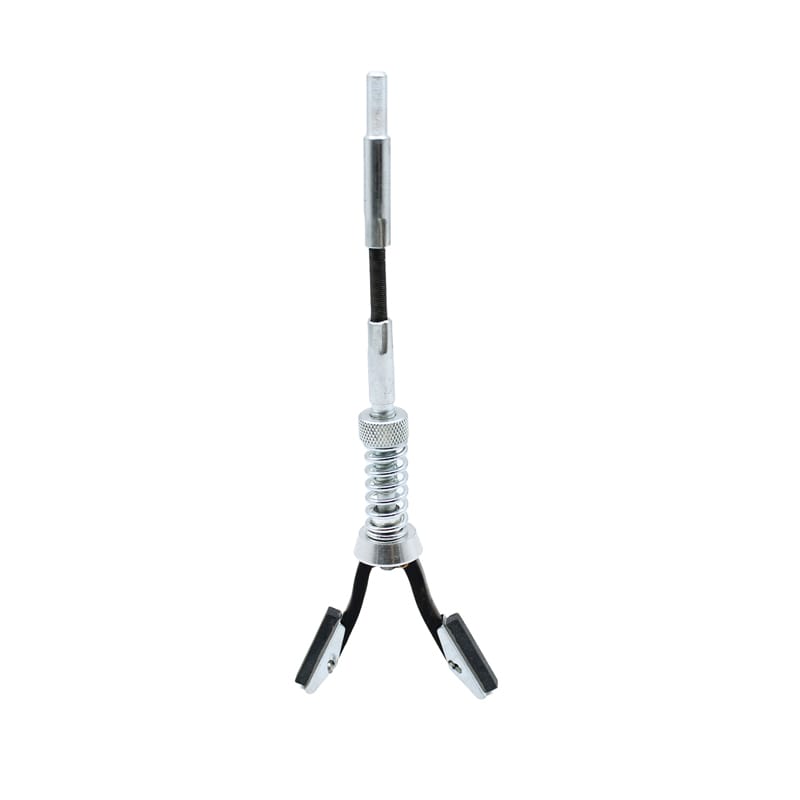
The shape of 1-1/8 „Bremszylinder mit zwei Knochen can help you recognise a compact hone. Use its stated dimensions and instructions for the actual fit decision. A miniature-looking product photograph is not evidence that the stones are short enough for your component.
The short-bore problem
In a short cylinder, a stone may extend beyond the supported wall during movement. Depending on the tool and component, that can let it catch an edge, strike an obstruction or load the remaining contact unevenly. Simply reducing the amount of motion is not automatically a solution, because the intended honing movement is part of how the surface is produced.
Consider a short sleeve with clear space beyond each end and a similarly short bore that stops at a solid shoulder. The entrance diameters may match, but the second part presents a different problem. The same tool cannot be assumed to work in both. You need a tool and process intended for that internal shape.
Avoid solving a clearance issue by removing a stone, shortening an abrasive by hand or forcing the arms into an unusual position. Those changes alter how the tool contacts and supports itself. If the supplied arrangement does not fit, identify a suitable alternative rather than turning the first component into a test of an improvised tool.
Small hydraulic cylinders deserve their own decision
A brake cylinder or another hydraulic part is not simply a small engine cylinder. Its surface may work against a seal, use a coating, or have service limits that rule out the repair you had in mind. A product described as a “brake cylinder hone” does not mean that every modern brake component is suitable for honing.
Find the manufacturer's reconditioning instructions for the exact component. Some damage or corrosion calls for replacement rather than abrasive treatment. Removing a pit until it disappears can enlarge the bore or affect the seal's working surface. A clean-looking wall is not evidence that the assembly will seal correctly under operating conditions.
For brake work, uncertainty about the permitted repair should be resolved before material is removed. This is not an issue that a finer grit or lighter touch can settle. The component's construction and service procedure determine whether honing belongs in the job at all.
A no-power fit check can reveal an obvious mismatch
With the tool disconnected from its power source, compare its shape with the measured component and follow the instructions for inserting it. The purpose is to establish clearance and alignment, not to scrape the surface by hand. Stop if the tool needs force to enter or if a retaining piece catches the opening.
Check whether the drive can remain in line with the bore while the body of the tool clears the surrounding part. Identify the limits of the available movement without allowing a stone to strike an end. Look for any point where the arms or abrasive holders could meet a port, step or surrounding casting.
This check can reject a visibly unsuitable tool. It cannot prove that the abrasive is correct, that the bore is within service limits or that the final finish will be acceptable. Think of it as checking that a key can reach a lock before discussing whether it is the right key. Access and function are related, but they are not the same test.
What unexpected contact is telling you
A knock at the end of the movement may indicate that the abrasive or holder is meeting a shoulder. Uneven contact near the entrance can suggest an alignment or support problem. An arm that does not move like the others may be dirty, damaged or caught. Stop and inspect the geometry rather than interpreting extra resistance as a request for more power.
Also inspect the opening itself. Burrs, damaged edges or an existing ridge can interfere with insertion. Do not automatically remove an edge to make a tool fit: that edge may be part of a functional feature. Determine whether the component's repair instructions call for any preparation and what dimensions must be retained.
If the head cannot move as intended, there may be a compact tool designed for the application, a different finishing method, or no suitable repair route. Recognising that limit early is an advantage. It keeps the cost of the wrong purchase from becoming the cost of a damaged component.
After access is solved, material and cleaning still matter
Small bores are not exempt from abrasive compatibility. A tool sized for a narrow iron bore cannot automatically be used on a plated surface, soft alloy or bearing surface. Identify the material and finish requirement before selecting the abrasive. BRM's small-diameter flexible-hone discussion is a useful example of how size and abrasive choice remain separate questions.
Cleaning can also be more difficult when the opening is narrow or the bore ends in a pocket. Plan how residue will be removed and how cleanliness will be checked before starting. If adjacent passages or assembled parts cannot be protected and cleaned as required, the job may need more disassembly. The small size of the tool does not make abrasive debris harmless.
Questions readers ask
Can I use a small hone on any hole within its diameter range?
No. Diameter does not establish access, surface-material compatibility or whether honing is an approved repair. Check the complete internal shape and the component instructions.
What is a blind bore?
It is a hole that has a closed end rather than passing all the way through the component. That closed end limits tool travel and can make an otherwise suitable-looking hone unusable.
Can I shorten the stones to fit a shallow cylinder?
Do not modify the abrasives unless the tool manufacturer supplies an approved method. Shortening them can affect support, retention and contact. Choose the correct tool arrangement instead.
Is a hand fit check enough before honing?
It can reveal interference, but it cannot confirm material suitability, acceptable wear or the required finish. Those decisions need the component and tool specifications.
Why is a hone sold for brake cylinders sometimes unsuitable for my brake part?
Brake designs and materials vary. The product category does not override the exact component’s service instructions, which may require replacement rather than honing.