
Inhaltsverzeichnis
A cylinder hone kit usually contains one or more honing heads, abrasive stones or replacement sets, and sometimes accessories for the drive or adjustment. It does not usually contain everything needed to assess and rebuild an engine. In particular, the case does not replace bore measurements, the engine's repair specifications or a decision about whether honing is appropriate.
If you are considering a kit for a first rebuild, open the project before opening the wallet: identify the engine, understand why it is apart and find out what condition the cylinders are in. A kit can be useful for a suitable, defined operation. It becomes an expensive distraction when bought in the hope that its assortment of pieces will tell you what repair the engine needs.
Identify the pieces by what they do
The honing head carries the abrasives and presents them to the wall. A smaller or larger head may cover a different diameter range. Replacement stones restore a particular head's abrasive surfaces or provide another specified abrasive option. A drive extension changes reach; it does not automatically expand the head's working range or make a different bore material compatible.
Lay the contents out beside the supplied list. Count heads separately from spare stones, holders and small fittings. A “many-piece” kit may contain several consumables for one application rather than many different working sizes. That is not necessarily a disadvantage, but it should match what you actually need.
Look for information identifying each abrasive set. Similar-looking stones can become difficult to distinguish once their packaging is removed. Keep the labels with them and avoid mixing pieces between heads unless the instructions explicitly allow it. A neatly fitted case is helpful only if you can still tell which pieces belong together.
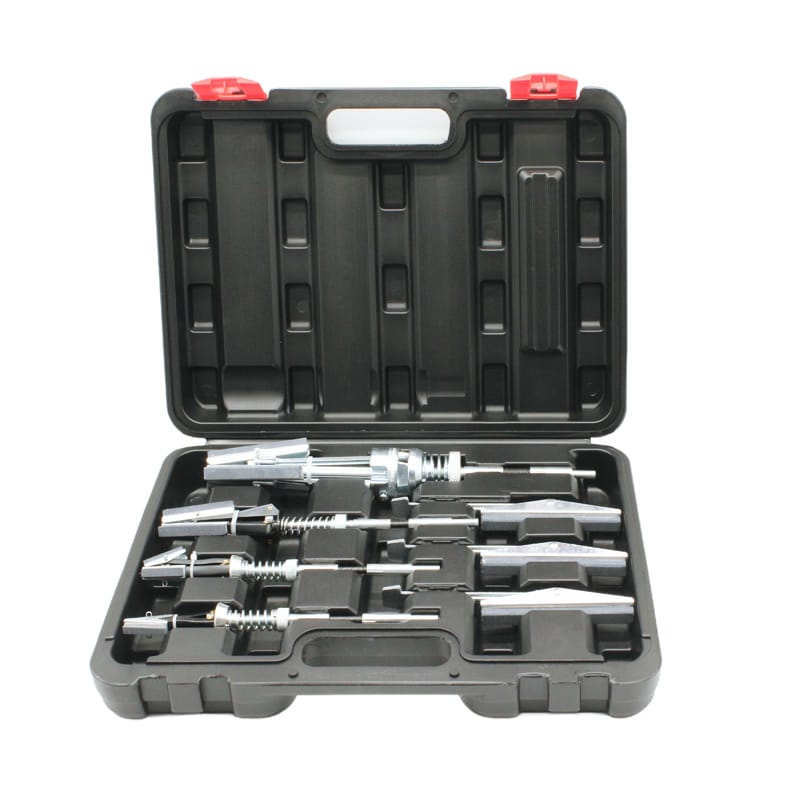
The contents shown for 7 Stück Zylinder Hone Werkzeug Set provide an example of a kit layout. Compare the included-item list with the photographs, then check the working range of each head. A case full of parts should answer a known need rather than become the starting point for deciding which surfaces to abrade.
The missing item that matters most is information
You need the engine identification and the applicable repair information. That establishes the bore limits, permitted repair options and the relevant piston and ring requirements. Without it, you cannot know whether removing material is acceptable or what the finished cylinder must be like.
The history of the engine can matter too. It may already have oversize pistons, replacement liners or a previous repair. The nominal size printed in a general model description may not describe the parts currently fitted. Inspect markings and measure rather than assuming the engine remains exactly as it left the factory.
If your reason for buying the kit is “the engine uses oil,” pause. Oil consumption can have more than one cause. A hone is not a general diagnostic instrument and does not prove that cylinder-wall condition is responsible. Establish the fault before committing to a repair that involves dismantling and machining decisions.
Measurement comes before the abrasive
An engine cylinder needs assessment along its length and in more than one direction. A single diameter at the opening cannot describe taper or out-of-round. Appropriate measuring tools and the ability to use them are separate from the honing kit itself.
A basic caliper can help identify an approximate size, but it should not be treated as a substitute for the specified cylinder measurement method. The differences that matter in an engine can be smaller than a casual check will reveal. If the measurement is beyond your equipment or experience, having the block assessed by a machine shop is a sensible part of the project.
Three projects that look similar but need different help
One engine has acceptable cylinder measurements and a service procedure that calls for a defined surface treatment when fitting new rings. A suitable honing tool may form part of that work. Its abrasive and operating instructions still need to match the cylinder construction and ring requirements.
A second engine has excessive wear or scoring. The correct repair may involve machining to a different size, a liner repair or replacement. A portable kit cannot put missing material back into the wall. Removing more material merely to erase the marks may make the original piston and ring arrangement less suitable.
A third engine has a coated cylinder. Its repair options may involve specialised equipment or a replacement part even when the damage appears small. Treating all three projects as “give it a quick hone” overlooks the condition that determines the outcome. The kit is chosen after the repair route, not before it.
| Before buying the kit | Why it affects the choice |
|---|---|
| Exact engine and cylinder construction | Determines applicable repair instructions |
| Measured bore condition | Separates finishing from dimensional repair |
| Intended piston and ring arrangement | Connects the surface work to the rebuilt assembly |
| Accessible bore length and diameter | Determines whether the head can work as intended |
| Tool and abrasive identification | Prevents mixing superficially similar components |
Plan the work around the whole component
The bore needs suitable access and support. Nearby components and passages must be protected and cleaned according to the repair procedure. A portable tool is not permission to carry out abrasive work in any partly assembled engine that happens to expose the top of a cylinder.
Think about where the removed material and abrasive residue will go. If you cannot clean the affected areas properly, the apparent time saved by avoiding disassembly may create a problem later. Also plan a clean area for prepared parts so that work already completed is not contaminated by the next abrasive operation.
Personal protective equipment and a stable working setup belong to the task, even if they are not included in the kit. Follow the tool instructions for the drive, lubricant and operation. Avoid copying a rotation speed or number of passes from a different engine merely because both tools look alike.
A kit is not always the economical route
For a one-off repair, compare the full job rather than the kit price alone. You may still need inspection, measurements, cleaning equipment and replacement parts. Paying for a qualified assessment can prevent buying tools for a process that will not solve the engine's problem.
Owning the kit makes more sense when you already understand the permitted operation and expect to use the relevant heads again. Even then, a large assortment is not automatically more useful than a smaller correct set. Unused sizes and unidentified spare stones add clutter rather than capability.
Ask a machine shop what work it recommends and what it will measure. You are not giving up on a DIY project by having a specialised step done elsewhere. Many successful home rebuilds combine careful disassembly and assembly with professionally measured machining work. The dividing line should be the requirements of the component, not the desire to use every tool personally.
Keep the case useful after the first job
Before a later job, inspect the head and confirm the new engine's requirements again. A kit that worked on one cylinder is not automatically approved for another construction or size. The useful knowledge you carry forward is how to check the job, not a fixed recipe of pressure, speed and time.
MAHLE's engine-component workshop resources provide background on cylinder and ring work. For the kit itself, use its supplied parts list and operating instructions. A good purchase leaves you knowing exactly which operation each piece supports and which parts of the rebuild still need separate attention.
Häufig gestellte Fragen
Does a honing kit include tools for measuring the bore?
Many do not. Check the included-item list. The presence of several heads or stones should not be confused with the equipment needed to measure cylinder wear accurately.
Can a kit repair low compression by itself?
No. Low compression needs diagnosis, and a bore may require a different repair. A finishing tool cannot establish the cause or replace worn components automatically.
Should a beginner buy the largest kit available?
Start with the defined job and required tool range. Extra pieces do not supply the missing knowledge about cylinder condition, material or the approved repair process.
Can the same stones be used for every head in the case?
Only where the manufacturer identifies them as compatible. Keep each matched set labelled, especially when different abrasives have a similar appearance.
Is using a machine shop inconsistent with doing my own rebuild?
No. You can perform appropriate parts of the project yourself while having measurement and machining carried out by someone with the necessary equipment and experience.