
Los vehículos modernos ya no son simples sistemas mecánicos. Los paneles interiores son más ajustados, los clips son más delicados y los diseños de molduras se construyen con estructuras de sujeción ocultas que exigen precisión durante el desmontaje. En este entorno, a herramienta de eliminación de molduras de automóviles ya no es un artículo “agradable”, sino que se ha convertido en un requisito estándar en el trabajo de reparación, detalle y personalización de automóviles.
Cualquiera que haya intentado quitar paneles interiores con herramientas improvisadas ya conoce el resultado: superficies rayadas, clips rotos o paneles que nunca vuelven a encajar igual. La diferencia entre un trabajo limpio y un interior dañado a menudo se reduce a la selección de herramientas, no solo a la habilidad.
Este artículo analiza cómo eligen realmente los profesionales herramientas de eliminación de molduras de automóviles, qué importa en condiciones reales de taller y por qué el diseño de herramientas juega un papel más importante de lo que la mayoría de la gente espera.
Tabla de contenidos
Comprender la función real de una herramienta de eliminación de moldeo de automóviles
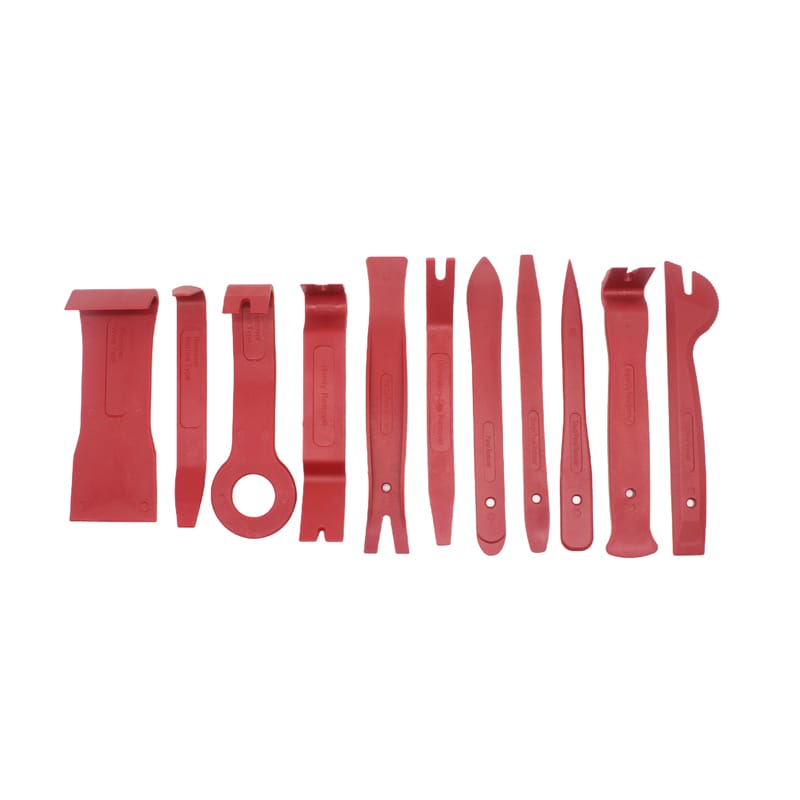
A primera vista, estas herramientas parecen sencillas. Pero su finalidad es muy específica: separación controlada sin daños superficiales.
Un adecuado herramienta de eliminación de molduras de automóviles está diseñado para:
- Deslícese hacia espacios estrechos del panel sin fuerza
- Distribuya la presión uniformemente a lo largo de los bordes de la moldura
- Suelte los clips sin doblarlos ni romperlos
- Proteja las superficies pintadas, de cuero y de plástico
- Mantenga el apalancamiento sin puntos de contacto afilados
En la práctica, esto significa que la herramienta hace más “separación controlada” que “hacer palanca”.”
La mayoría de los daños en el interior del vehículo no ocurren porque alguien tiró demasiado fuerte, sino porque se aplicó presión en el ángulo equivocado o en el borde equivocado.
Donde estas herramientas se utilizan realmente en reparaciones reales
El rango de aplicaciones es más amplio de lo que muchos esperan. En condiciones reales de taller, herramientas de eliminación de molduras de automóviles se utilizan en casi todos los operativos interiores y exteriores ligeros.
Los casos de uso típicos incluyen:
- Extracción del panel de la puerta para reparaciones de cerraduras o ventanas
- Desmontaje de salpicadero para acceso a cableado o sensores
- Instalación de sistemas de audio y enrutamiento de cableado
- Reemplazo de molduras interiores después de desgaste o daños
- Trabajos de preparación de envoltorios de vehículos
- Extracción de clips y sujetadores durante el reensamblaje
Lo que hace que esta categoría de herramientas sea importante no es sólo la eliminación, sino también la precisión del reensamblaje. Un clip dañado hoy se convierte mañana en un panel vibrante.
Por qué ocurre la mayoría de los daños durante la eliminación de molduras
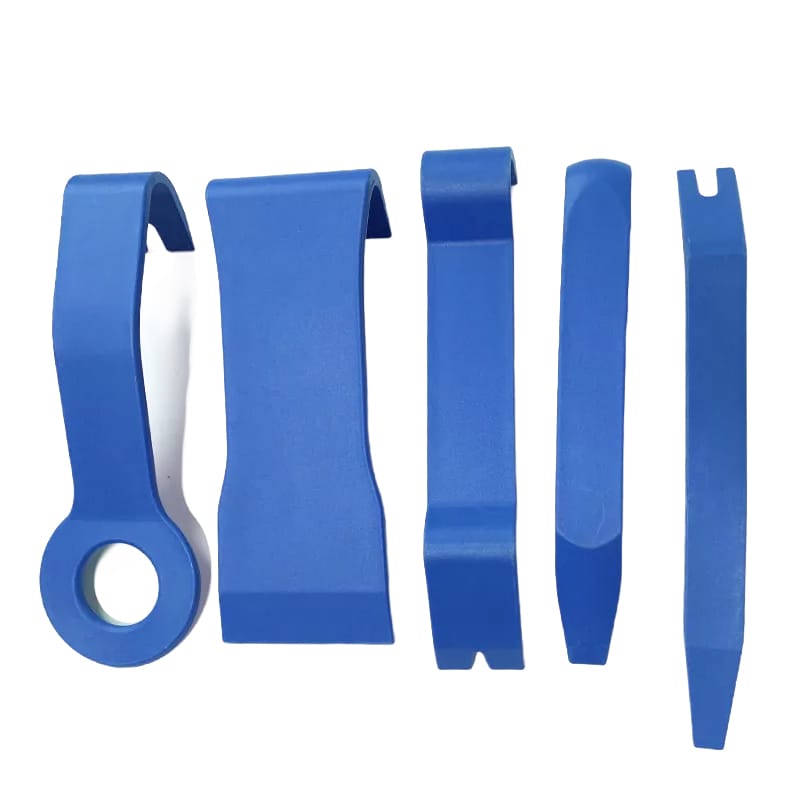
En muchos casos de reparación, el fallo no es una complejidad técnica, sino una falta de coincidencia de herramientas.
Los temas más comunes vistos en los talleres incluyen:
- Uso de herramientas de metal duro sobre superficies pintadas
- Aplicar fuerza antes de localizar sujetadores ocultos
- Aprovechar desde un único punto de tensión en lugar de distribuir la presión
- Trabajar sin entender el posicionamiento del clip
- Reutilización de herramientas de palanca desgastadas o deformadas
Una vez que se agrieta un clip o se dobla una pestaña de montaje, el panel rara vez vuelve a encajar de fábrica. Por eso los profesionales dependen en gran medida de una estructura juego de herramientas para quitar molduras de automóviles en lugar de herramientas individuales.
Materiales de herramientas que realmente importan en la práctica
La selección de materiales no se trata sólo de durabilidad, sino que afecta directamente a la seguridad y al control de la superficie.
Herramientas a base de nailon
Se utilizan ampliamente en entornos profesionales porque equilibran flexibilidad y resistencia. Se doblan ligeramente bajo presión, lo que reduce el riesgo de marcar la superficie.
Herramientas de plástico reforzado
Común en aplicaciones interiores. Su ventaja es la protección de la superficie, especialmente en áreas de acabado pintadas o brillantes.
Herramientas de clip metálico
Se utilizan selectivamente para sujetadores que resisten la extracción normal. Requieren experiencia, ya que el mal uso puede dañar fácilmente los componentes circundantes.
Diseños compuestos
Una categoría creciente que combina rigidez y flexibilidad, utilizada a menudo en usos múltiples herramientas de palanca automotrices.
En la práctica, la mayoría de los técnicos cambian entre materiales dependiendo de la estructura de la moldura en lugar de depender de un tipo.
Por qué la forma de la herramienta es más importante de lo que piensa la mayoría de
Cuando se habla de herramientas de recorte, el material suele llamar la atención primero. Pero la forma determina el rendimiento real.
Los factores clave de diseño incluyen:
- Bordes de entrada delgados para espacios estrechos en el panel
- Perfiles curvos para distribución de apalancamiento
- Superficies de contacto planas para reducir las marcas de presión
- Puntas bifurcadas para soltar clips
- Cabezales en ángulo para puntos de acceso ocultos
Una herramienta mal formada puede dañar incluso cuando está hecha de materiales seguros. Por eso profesional kits de herramientas para recortar automóviles generalmente incluye varios perfiles en lugar de un diseño universal.
La diferencia entre conjuntos de herramientas profesionales y básicos
No todas las herramientas de recorte se utilizan en el mismo entorno. Las condiciones del taller son muy diferentes al uso ocasional de bricolaje.
Los conjuntos de herramientas profesionales suelen centrarse en:
- Apalancamiento constante durante el uso repetido
- Resistencia a la deformación bajo presión
- Múltiples ángulos de acceso para diferentes vehículos
- Agarre mejorado para sesiones de trabajo largas
- Fatiga reducida durante el funcionamiento continuo
Las herramientas básicas pueden funcionar para reparaciones ocasionales, pero en entornos automotrices diarios, la inconsistencia se convierte en un problema real.
Una forma práctica en que los profesionales abordan la eliminación de molduras
En lugar de forzar la retirada de piezas, los técnicos experimentados siguen un método repetible:
Comienzan identificando las posiciones de los sujetadores antes de que cualquier herramienta toque la superficie. Una vez que se comprende la estructura, los puntos de entrada se prueban ligeramente en lugar de forzarlos.
La presión se aplica gradualmente, no repentinamente. Si aparece resistencia, la suposición siempre es “clip oculto todavía activado”, no “necesita más fuerza”
Este enfoque reduce los clips rotos y elimina la mayoría de los problemas de deformación del panel.
Supervisión común que conduce a daños
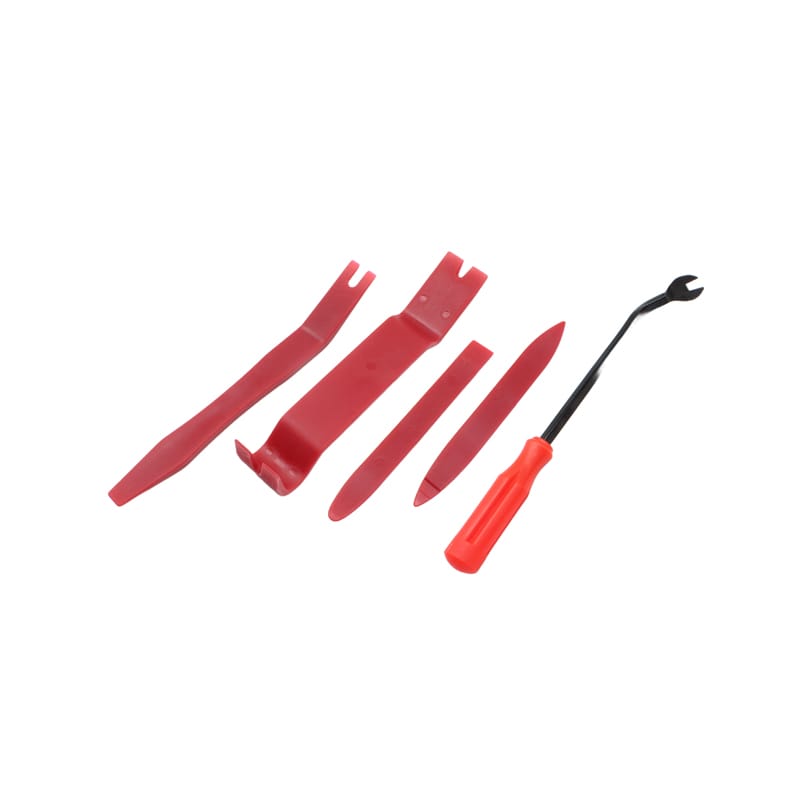
Incluso los usuarios experimentados a veces pasan por alto factores simples:
La temperatura fría aumenta la rigidez del plástico. Los paneles se vuelven más frágiles y menos indulgentes con la fuerza.
Los sujetadores ocultos a menudo se colocan cerca de las esquinas o detrás de molduras decorativas. Falta solo uno puede causar grietas cuando se tira del panel.
El uso de herramientas desgastadas también cambia el comportamiento de apalancamiento. Un borde ligeramente doblado puede concentrar la fuerza en lugar de distribuirla.
Estos pequeños detalles suelen ser la verdadera causa de los errores de reparación, no de la técnica.
Perspectiva de fabricación: por qué es importante el control de calidad
Desde el punto de vista de la producción, la consistencia es más importante que la apariencia.
Confiable herramienta de eliminación de molduras de automóviles fabricante los procesos normalmente se centran en:
- Estabilidad del material en lotes
- Precisión en el acabado de los bordes
- Pruebas de estrés estructural
- Uniformidad de textura de agarre
- Pruebas flexibles bajo carga repetida
Para las cadenas de suministro de talleres y OEM, la inconsistencia crea problemas operativos. Una herramienta que funciona bien una vez pero falla después de un uso repetido no se considera confiable en entornos profesionales.
Donde la demanda está creciendo más rápido
El uso de herramientas de eliminación de molduras continúa expandiéndose más allá de los talleres de reparación tradicionales.
El crecimiento más fuerte se ve en:
- Talleres de personalización del interior del vehículo
- Estudios de detallado automotriz
- Servicios de embalaje de automóviles y modificación de superficies
- Mantenimiento interior de vehículos eléctricos
- Técnicos de reparación independientes y proveedores de servicios móviles
Los interiores de los vehículos son cada vez más modulares, pero también más sensibles. Esa combinación aumenta la dependencia de herramientas de mudanza controladas.
Un cambio silencioso en las herramientas de reparación de automóviles
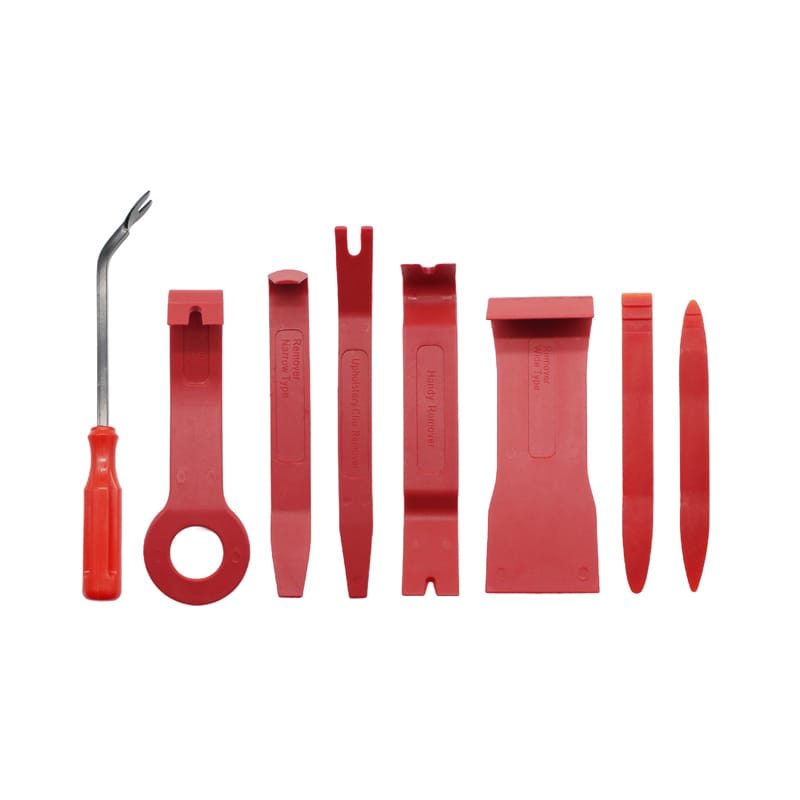
Una tendencia notable es que la eliminación de molduras ya no se trata como una tarea secundaria. Se ha convertido en una parte definida de los flujos de trabajo de reparación.
Los técnicos ahora esperan:
- Desmontaje más rápido y sin daños
- Alineación del reensamblaje del limpiador
- Tasas reducidas de reemplazo de clips
- Mejor durabilidad de la herramienta en uso repetido
Este cambio está presionando herramientas de eliminación de molduras de automóviles en una categoría más especializada que los accesorios generales de taller.
Conclusión
A herramienta de eliminación de molduras de automóviles no es simplemente una herramienta de palanca: es una interfaz controlada entre el técnico y el interior del vehículo. A medida que el diseño del automóvil se vuelve más preciso y sensible a los materiales, el margen de error durante la eliminación de molduras continúa reduciéndose.
La diferencia entre una reparación limpia y un interior dañado a menudo se reduce a la selección de herramientas, el diseño de bordes y el método de manipulación, más que a la fuerza o la experiencia únicamente. Para talleres, fabricantes y profesionales del automóvil, invertir en ingeniería adecuada herramientas de eliminación de molduras de automóviles mejora directamente la consistencia del flujo de trabajo, reduce el retrabajo y respalda estándares de reparación de mayor calidad.
En los entornos automotrices modernos, la precisión ya no es opcional, como se espera.
Preguntas frecuentes
¿para qué se utiliza una herramienta de eliminación de molduras de automóviles?
Está diseñado para quitar de forma segura molduras, paneles, clips y molduras de automóviles sin rayar la pintura ni dañar las superficies interiores.
¿Puede una herramienta de eliminación de molduras de automóviles prevenir daños al vehículo?
Sí. Cuando se usa correctamente, reduce el riesgo de clips rotos, paneles agrietados y rayones en la superficie durante el desmontaje.
¿qué material es mejor para la eliminación de molduras de automóviles herramientas?
El nailon y el plástico reforzado se utilizan habitualmente porque ofrecen un equilibrio entre flexibilidad, resistencia y protección de la superficie.
¿son los kits de herramientas para quitar molduras mejores que las herramientas individuales?
Sí. Un kit completo de herramientas para quitar molduras de automóviles proporciona múltiples formas y ángulos, lo que lo hace adecuado para diferentes estructuras de vehículos y tareas de reparación.
¿Cómo evitan los profesionales dañar los clips durante la retirada?
Primero identifican las ubicaciones de los sujetadores, aplican presión gradual y utilizan la herramienta de extracción de clips automotriz correcta en lugar de forzar la apertura de los paneles.