
Table of Contents
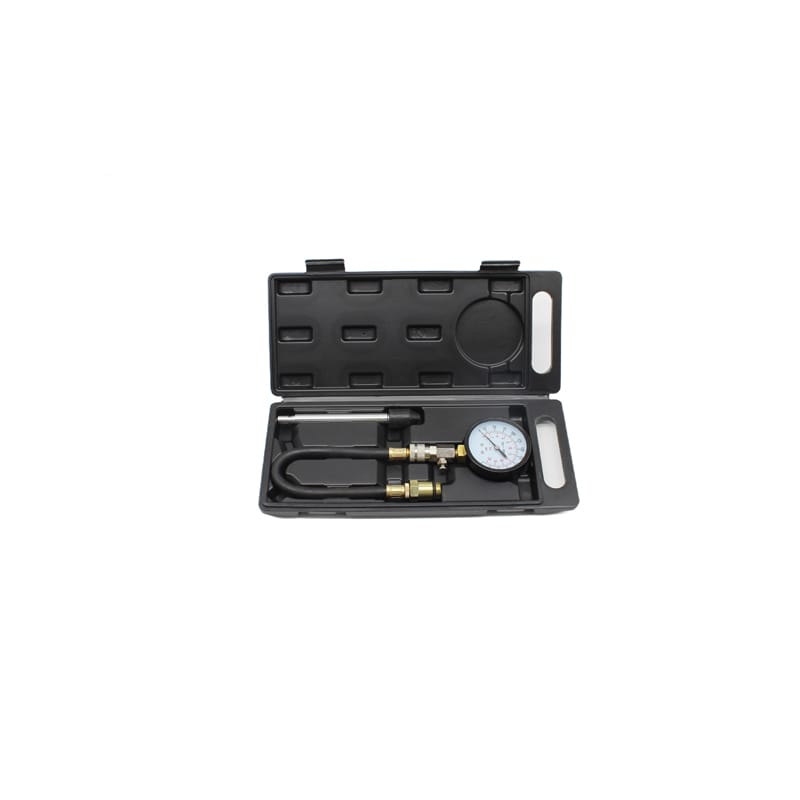
What an Engine Compression Tester Helps Technicians Find
An engine compression tester is a diagnostic tool used to check cylinder sealing condition. When a vehicle has hard starting, misfire, uneven idle, or power loss, technicians may use an engine compression tester to compare pressure readings across cylinders and decide whether further inspection is needed.
For workshops, the value of an engine compression tester is speed and direction. The tool does not replace full diagnosis, but it helps technicians separate ignition, fuel, and mechanical concerns more efficiently. For distributors and OEM tool buyers, the key is choosing a kit that fits the engines and service habits of the target market.
This guide explains how to evaluate an engine compression tester for professional automotive service. It covers gauge readability, hose and adapter selection, gasoline and diesel applications, case layout, related testing tools, and product range planning.
Start With Engine Type and Adapter Coverage
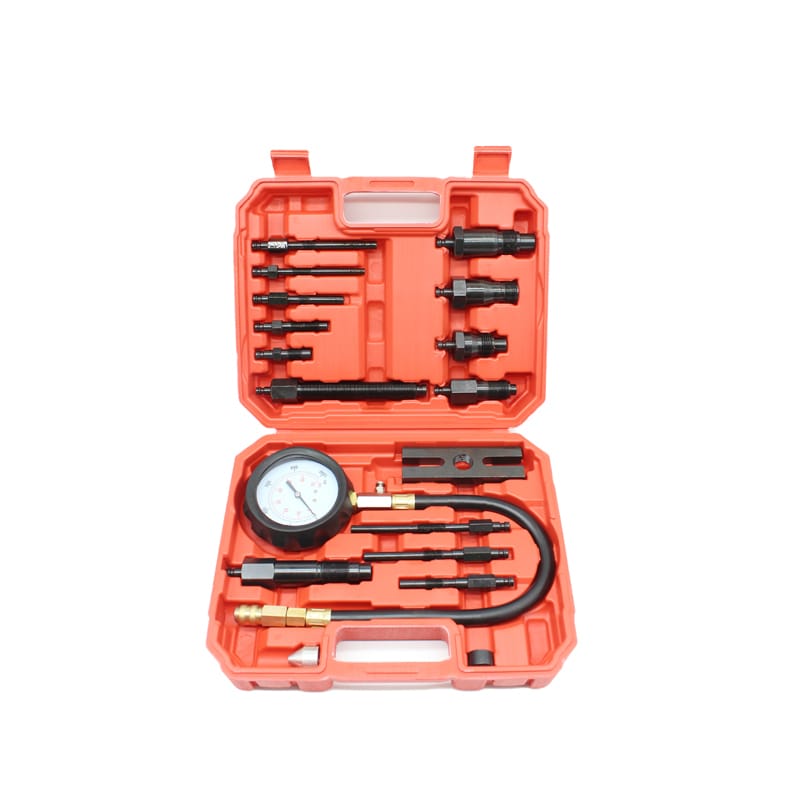
The first buying question is engine coverage. A basic engine compression tester may suit gasoline engines with common spark plug thread sizes. A diesel compression test set usually needs different adapters and a pressure range suited to diesel applications. Buyers should not assume one kit covers every engine.
For technical background, readers can review the concepts of an internal combustion engine and compression ratio. In workshop practice, the technician is looking for useful comparison data between cylinders, not just a single number.
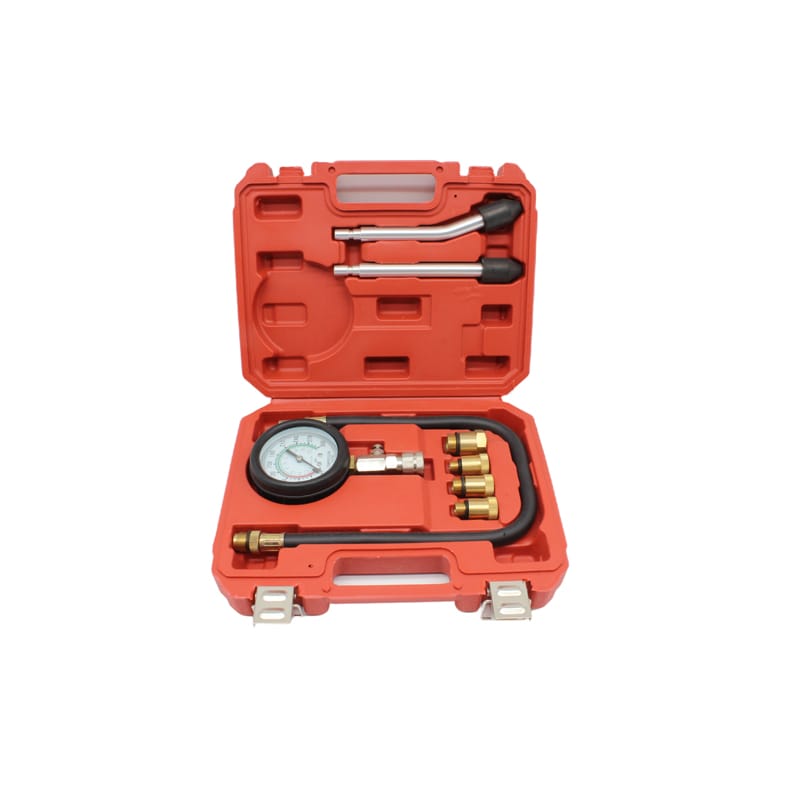
Fengjie offers options such as the 8 PCS Cylinder Compression Tester Kit, 17PC TU-15B Diesel Engine Compression Test Set, and related Testing Tool products.
For wholesale buyers, adapter coverage is also a customer service issue. If the kit is too narrow, workshops may return to the distributor for missing pieces or choose another supplier for future diagnostic tools. A clearly defined kit helps buyers understand the intended use before purchase and reduces confusion after delivery.
Check Gauge Readability and Hose Quality
The gauge is the part users judge first. A professional engine compression tester should have a clear dial, readable markings, and a needle that returns properly after use. If technicians cannot read the gauge quickly, the tool slows diagnosis and creates uncertainty.
Hose quality also matters. The hose should connect securely, resist normal workshop handling, and allow the technician to reach cylinders without awkward bending. Quick couplers and adapters should fit cleanly without feeling loose. A poor hose or weak fitting can make a good gauge frustrating to use.
When comparing samples, buyers should assemble and disassemble the engine compression tester several times. The threads, couplers, release valve, and case positions should all feel logical. These details are easy to miss in catalog photos but important in daily repair work.
Gasoline Kits, Diesel Kits, and Leak Detection
A gasoline engine compression tester is often used through the spark plug hole. Diesel engines may require different adapters and higher pressure ranges, so diesel kits should be evaluated separately. A distributor serving mixed workshops may need both gasoline and diesel diagnostic tools in the catalog.
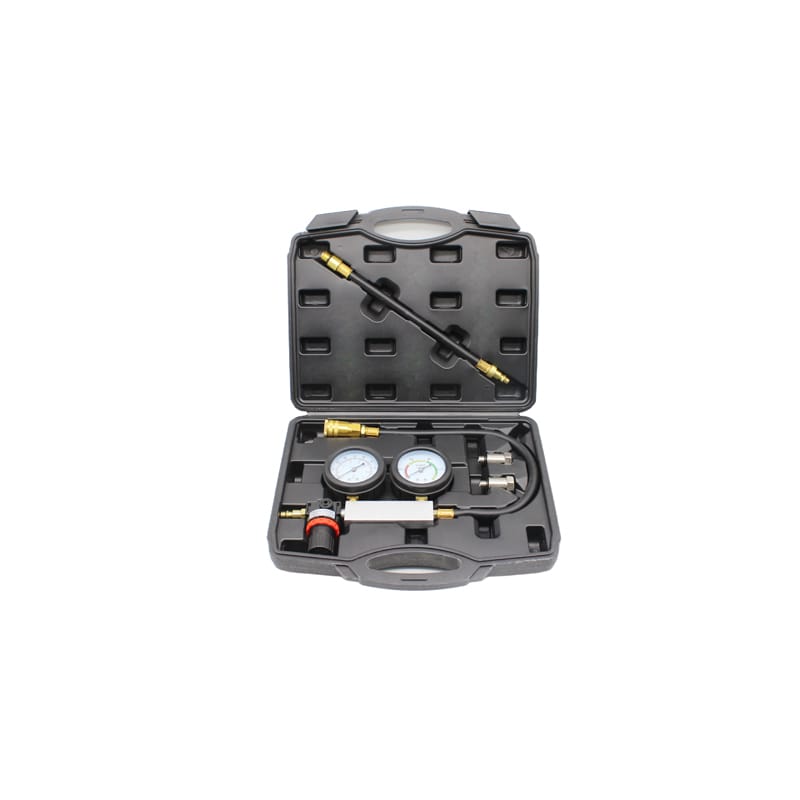
Compression testing can also sit beside leak-down testing. A compression test gives a pressure reading during cranking, while a leak-down style tool helps locate where air may be escaping. Fengjie lists a TU-21 Cylinder Leak Detector Kit as a related diagnostic option for buyers building a broader engine testing range.
For general context on emissions and engine condition, buyers can consult the U.S. Environmental Protection Agency information on vehicles and emissions. A good diagnostic tool range supports more accurate maintenance decisions without making exaggerated claims.
Build a Diagnostic Tool Range for Workshops
For distributors, an engine compression tester works best as part of a diagnostic category. A useful range may include gasoline compression testers, diesel compression test sets, leak detector kits, fuel pressure tools, and related engine service products. This lets customers choose based on vehicle type and diagnostic depth.
Fengjie products in the Engine Tools category can support this kind of range planning. Buyers can combine an engine compression tester with leak detection tools and other testing products to create a clearer catalog structure.
| Customer type | Suggested tool | Selection focus |
|---|---|---|
| General repair shop | Gasoline engine compression tester | Common adapters and easy gauge reading |
| Diesel service shop | Diesel compression test set | Adapter range and higher pressure capability |
| Diagnostic-focused workshop | Compression and leak detector tools | More complete fault tracing |
| OEM tool brand | Customized diagnostic kit | Packaging, labeling, and stable supply |
Quality Control Points for Bulk Buyers
Bulk buyers should check gauge consistency, hose connection quality, adapter threads, case layout, and packaging strength. The engine compression tester should be easy to store and easy to check before use. Missing adapters or unclear tray positions can create complaints even when the tool itself works properly.
General workshop safety still applies. OSHA guidance on hand and power tools is useful background, and NHTSA information on vehicle equipment reinforces why reliable maintenance tools matter in automotive service.
For OEM projects, buyers should confirm product labeling, instruction language, barcode needs, carton details, and whether the supplier can repeat the same configuration over time. A stable engine compression tester program is easier to manage when the kit contents and packaging are clearly defined before production.
Final Buying Checklist
Before choosing an engine compression tester, confirm the engine types, adapter coverage, pressure range, gauge readability, hose length, coupler quality, case design, and supplier support. If the buyer serves distributors, it may be better to offer several diagnostic kits rather than one broad but unclear set.
A well planned engine compression tester range helps workshops diagnose engine condition more efficiently and gives tool distributors a practical product category. It also connects naturally with other engine service and testing tools, which can improve catalog depth without duplicating existing products.
Review Fengjie Testing Tool products, explore Engine Tools, or contact us to discuss OEM, ODM, or wholesale diagnostic tool requirements.