
Table of Contents
The grit number on engine cylinder hone stones describes the abrasive grading. It does not tell you whether the stones fit your tool, suit your cylinder material or will produce the finish required by your piston rings. To choose a replacement, match the tool's stone specification first, then confirm that the intended honing process is suitable for the engine.
This distinction matters because stones that look almost identical can behave differently. A finer-looking surface is not automatically a better cylinder finish, and a new stone does not make a worn holder accurate. The following explanations help you read a stone listing and recognise a problem without needing to become an abrasives specialist.
Read a stone description in four parts
Start with the tool or holder reference. It identifies the arrangement the stone is made to fit. Next, check the stone's physical size and backing: its length, width, thickness and attachment features. The abrasive material is a separate specification, followed by its grit grade. All four pieces belong together.
For example, two replacement sets might both carry the same grit number and have similar lengths. One may use a backing that locates securely in your holder; the other may sit at an angle or rely on a different clip. They are not interchangeable simply because the abrasive face looks right. A photograph is useful for identifying the general pattern but cannot confirm a hidden locating feature.
Coarse and fine describe texture, not a complete repair
In ordinary abrasive grading, a lower grit number generally describes a coarser abrasive and a higher number a finer one. Coarser cutting can remove material more aggressively and leave a different scratch pattern. But grit numbers do not provide a universal conversion into the final cylinder surface. The abrasive type, stone construction, lubrication, pressure and motion also affect the result.
That is why “use the finest stone available” is poor advice. Piston rings need a suitable working surface, not a mirror finish chosen for its appearance. Equally, choosing a coarse stone because a bore has a visible mark can remove more material than the repair allows. The ring and cylinder instructions decide the required process; the stone is one part of that process.
Do not transfer a grit recommendation from a general sanding project to an engine. Nor should you assume that a number used for one abrasive grading system means exactly the same thing in another. When the tool maker lists mesh rather than grit, or describes a specialised abrasive, follow that product's documentation instead of comparing the printed numbers alone.
Why the cylinder material changes the answer
A cylinder may have an iron running surface, a plated surface or another construction. They do not all respond to the same abrasive. The fact that a stone physically touches the wall tells you nothing about whether it is appropriate for the material beneath it. Removing a small amount of the wrong surface can be a large problem.
Identify the engine and cylinder before selecting the abrasive. If a cylinder has been replaced or repaired in the past, its construction may differ from what a broad model description suggests. A specialist can help resolve that uncertainty. Avoid treating “works on engines” as a meaningful compatibility statement when the listing does not say which materials and processes it covers.
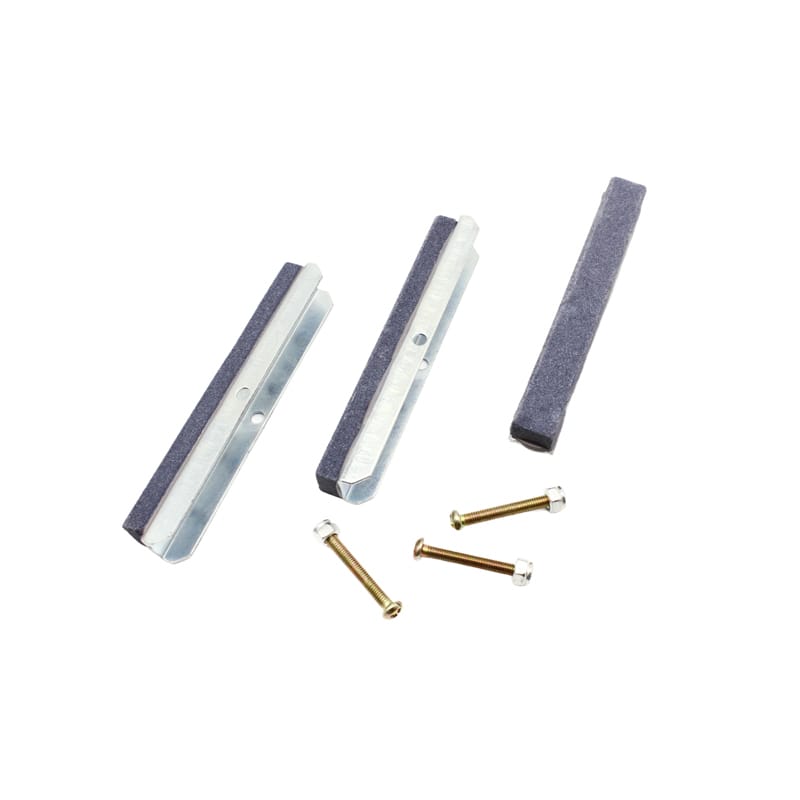
A replacement such as 3″ Hones is a starting reference for the tool pattern, not a universal answer for every engine. Look for the complete supplied specification. If the abrasive type is missing, the grit number cannot fill that gap.
A shiny stone may be loaded, not simply worn out
During use, material can build up in an abrasive surface and make it cut poorly. A stone may also become smooth or glazed, or wear into an uneven shape. These conditions can look similar in a small photograph, but they call for different decisions. Do not respond to all of them by increasing pressure.
First stop and inspect the tool with its power source disconnected. Look for cracks, chipped edges, loose backing and uneven wear. A cracked or insecure stone should not go back into a rotating tool. Check that the holder moves freely and supports the stone properly; a damaged holder can make a sound replacement behave badly.
Cleaning or dressing an abrasive is appropriate only where the stone and tool instructions permit it. Do not improvise a dressing method with another abrasive or soak an unknown bonded stone in a random solvent. You may damage its bond or backing while making the surface look cleaner. If the stone's identity is uncertain, replacement with the correct part is usually a clearer path than experimenting inside a cylinder.
Replace a matched set as a matched set
A multi-stone head depends on the stones contacting the bore as intended. Combining a new thick stone with two heavily worn ones can change that contact. Mixing grit grades or abrasive types produces an even less predictable arrangement. Unless the manufacturer's instructions explicitly allow individual replacement in that condition, treat the stones as a matching set.
Lay the old and new parts on a clean surface before installation. Check the number of stones, the backing shape and the retaining hardware. Fit the set with the tool disconnected, then check that each stone is secure and that the arms can move without a clip catching. Remove all packaging fragments before the head goes near the workpiece.
| What you notice | What it may mean | Useful next check |
|---|---|---|
| One stone wears much faster | Uneven contact or a holder problem | Inspect the arms, backing and complete set |
| Cutting seems weak | Loading, glazing or the wrong process | Review stone identity and permitted maintenance |
| A new stone sits crooked | Incorrect backing or incomplete seating | Compare the replacement part and retainer |
| A stone edge is chipped | Damaged abrasive | Stop using that set and follow replacement guidance |
| The wall looks polished but measurements are wrong | Appearance has hidden a dimensional problem | Reassess the cylinder repair, not just the grit |
What to inspect after the tool has been used
Separate the tool inspection from the cylinder inspection. The tool should have intact stones, secure attachments and no new uneven wear. The cylinder needs the measurements and surface checks required by its repair procedure. A stone that survived the operation is not proof that the bore was finished correctly.
Cleaning is part of the engine work, not an optional cosmetic step. Abrasive residue and removed material must not remain in the bore or adjacent passages. Follow the engine's cleaning and preparation instructions before assembly. A wall that feels smooth to a finger can still carry contamination; avoid treating a quick visual check as the whole cleaning process.
If a finish does not look consistent, document where the change occurs before trying another pass. A patch near the top, a narrow untouched strip and a deep score through the full length can have different causes. Continuing until every mark disappears may enlarge a cylinder unnecessarily. The useful question is what the mark represents and whether the approved process is still appropriate.
Further reading on cylinder finish
For broader context, MAHLE's workshop information on cylinders and piston rings explains why cylinder preparation belongs to the whole engine repair. Use the exact tool manual for fitting replacement stones and the engine or ring instructions for the required finish. The key is to connect the right replacement part to the right job, rather than asking one grit number to make every decision.
Quick answers
Can I choose hone stones by colour?
No. Colour is not a dependable code for abrasive type or grit across manufacturers. Use the part reference and written specification.
Are longer stones always better?
No. Stone length must suit the tool and the cylinder’s working length. A longer stone can create clearance problems in a short bore or near a shoulder.
Can I replace only the broken stone?
Follow the tool manufacturer’s instructions. Do not casually mix a new stone with differently worn or differently specified stones in the same head. The contact arrangement matters.
Will fresh stones fix a wobbling hone?
Not if the wobble comes from a bent drive, loose pivot or damaged holder. Inspect the mechanism before installing another set of abrasives.
Does a higher grit number mean less cleaning afterward?
No. Fine abrasive residue also needs removal. Use the engine’s specified cleaning process regardless of how smooth or tidy the finished surface appears.