
A car trim panel clip remover is one of the most useful hand tools when plastic pry tools have already created access but a stubborn automotive fastener still refuses to release. Door panels, window trim, molding, upholstery panels, dashboard sections, emblems, and interior components can all use retainers that need concentrated, controlled leverage close to the clip rather than force applied across a wide panel area.
That is where a metal car trim panel clip remover earns its place. The tool is not intended to replace every nylon wedge or upholstery tool. Its job is to provide a thin, rigid working end that can reach a fastener, position force near the retention point, and remove clips that may be too tight for a flexible plastic tool.
This guide explains how tool geometry changes leverage, when a 55-steel remover makes sense, how to reduce broken clips and panel damage, and what professional buyers should inspect before approving a production order.
Table of Contents
What Is a Car Trim Panel Clip Remover?
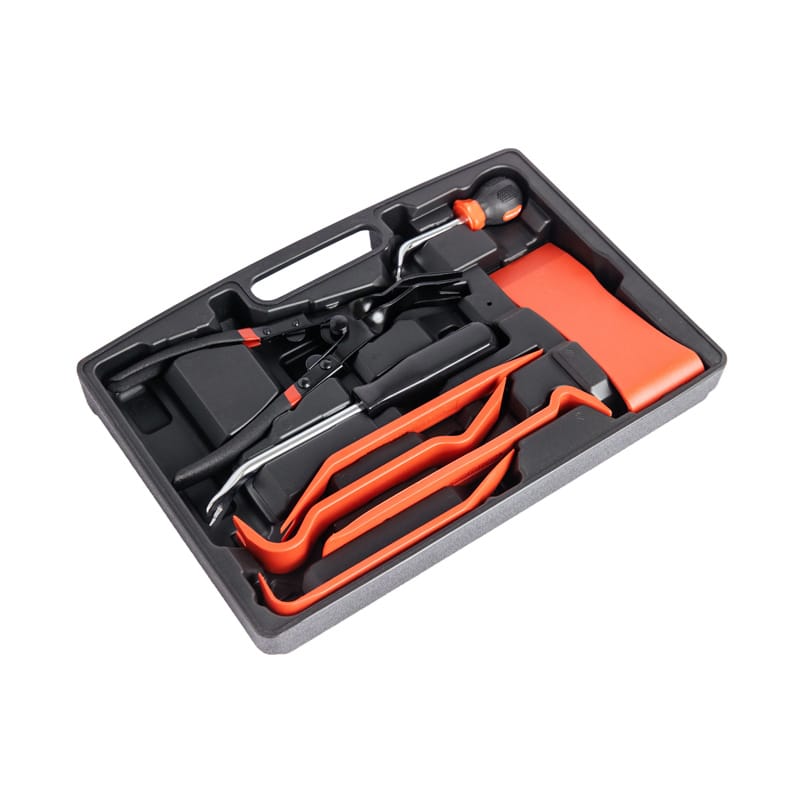
A car trim panel clip remover is a hand tool designed to lift, pull, pry, or release automotive fasteners used on trim panels, door cards, molding, window trim, interior panels, and related vehicle components.
Many versions use a forked or slotted metal working end. The slot allows the tool to move around the stem or base of a fastener so leverage can be applied closer to the clip instead of several centimeters away on the panel itself.
A typical working sequence is:
- Create a small access gap with a suitable trim tool.
- Identify the clip or fastener location.
- Slide the car trim panel clip remover toward the fastener.
- Position the fork as close to the clip stem as possible.
- Establish a stable leverage point.
- Apply progressive force in the correct release direction.
- Stop if the clip twists, the panel bends excessively, or resistance does not match expectations.
- Inspect the removed fastener before reuse.
Fengjie’s Car Trim Panel Clip Cutter Puller Fastener Rivets Remover is made from 55 steel and is intended for trim-removal applications around door panels, molding, window trim, clips, fasteners, emblems, panels, and related automotive components.
That makes it a useful example of a rigid car trim panel clip remover intended for jobs where stronger, more precise leverage is needed.
Why a Metal Clip Remover Still Matters in a Nylon-Tool Kit
Modern automotive trim work often starts with nylon or PP tools because they reduce direct metal contact with visible surfaces.
That does not make metal removers obsolete.
A rigid car trim panel clip remover solves a different problem.
Plastic wedges are excellent for:
- Creating the first gap
- Separating broad trim edges
- Working around painted or soft-touch surfaces
- Lifting decorative covers
- Identifying hidden fasteners
A metal remover becomes useful when:
- A clip is tightly seated
- The fastener is deeper behind the panel
- A narrow, rigid working tip is required
- The plastic tool flexes before the clip moves
- The fastener needs force closer to its stem
- Repeated workshop use demands greater rigidity
The safest workflow is often a combination.
Start with a non-marring tool. Once the fastener is visible or its position is known, move the car trim panel clip remover closer to the retention point.
This reduces the temptation to use the steel tool as the first contact point against a delicate finished surface.
The Mechanics of Leverage: Why Tool Position Matters More Than Force
A common mistake is to assume a stubborn clip simply needs more force.
In reality, the effectiveness of a car trim panel clip remover depends heavily on where the tool contacts the fastener and where it pivots.
If leverage is applied far away from the clip:
- The panel bends
- The clip mount takes more stress
- The tool may slip
- More hand force is required
- The fastener may twist instead of releasing
When the working fork is positioned close to the clip stem, more of the applied force acts directly on the fastener.
This is one reason a purpose-designed car trim panel clip remover can outperform a screwdriver even when both tools are made from steel.
The working geometry is different.
A good remover should create a predictable mechanical advantage without forcing the technician to use the trim panel as a long, flexible lever.
For high-frequency workshop use, this also reduces unnecessary physical effort. The NIOSH Guide to Selecting Non-Powered Hand Tools recommends matching hand tools to the task while considering grip, force, repetition, and posture.
Fork Width, Slot Depth, and Tip Thickness
Three dimensions have a major effect on how a car trim panel clip remover performs.
Fork Width
The fork opening needs to move around or close to the fastener stem.
If the slot is too narrow, the tool may stop against the clip before the working surfaces reach the best leverage point.
If the opening is too wide, the tool may contact the surrounding panel rather than the fastener.
A professional product range can benefit from several fork widths because automotive retainers are not standardized to one universal size.
Slot Depth
Slot depth determines how far the car trim panel clip remover can move around the fastener before leverage begins.
A shallow slot may be adequate for exposed clip heads.
A deeper slot can help around fasteners whose stems are positioned farther behind the trim edge.
However, deeper is not automatically better. Tool geometry should match the intended clip types and available clearance.
Tip Thickness
A thin steel tip is one of the main advantages of a metal remover.
It can enter gaps that would require a thicker plastic tool to bend or deform.
The tradeoff is surface risk.
A thin rigid edge can concentrate pressure, so the technician should make sure the working end is contacting the fastener and not cutting into a painted or plastic surface.
For B2B buyers, tip thickness should be treated as a measurable specification rather than a visual feature.
Why 55 Steel Can Be Suitable for a Car Trim Panel Clip Remover
Fengjie’s current product page specifies 55 steel for its clip cutter and remover.
For a car trim panel clip remover, steel selection matters because the working end must remain thin enough for access while resisting permanent deformation during normal leverage.
Buyers should not evaluate steel quality from the material name alone.
The finished performance also depends on:
- Heat treatment
- Working-section thickness
- Fork geometry
- Surface treatment
- Grinding and edge finishing
- Shaft cross-section
- Handle connection
- Production consistency
During sample testing, check whether the fork remains aligned after repeated removal cycles.
A rigid car trim panel clip remover that bends permanently after several representative fasteners will quickly become less accurate and more likely to slip.
At the same time, extreme hardness is not automatically the goal. A tool should have enough strength and toughness for the intended work without becoming brittle.
For wholesale and OEM programs, the most useful specification is one tied to repeatable functional testing rather than a vague “heavy-duty steel” claim.
When to Use a Car Trim Panel Clip Remover on Door Panels
Door panels are a primary application because they commonly combine visible trim with push-in fasteners around the perimeter.
A controlled process is more important than raw leverage.
Remove Hidden Screws First
Before using the car trim panel clip remover, inspect areas around:
- Door pull handles
- Armrests
- Switch panels
- Inner handle bezels
- Speaker covers
- Storage pockets
- Lower trim edges
- Decorative caps
If the panel still has a mechanical fastener installed, more clip-removal force will not solve the problem.
Create Initial Access With a Plastic Tool
A nylon wedge can create a small gap with lower surface-marking risk.
Fengjie’s 4pcs Plastic Auto Car Door Panel Trim Removal Tools Kit Set includes several profiles for interior and exterior trim access.
Once the first clip position is identified, the car trim panel clip remover can be moved toward the fastener.
Position the Fork Close to the Clip
The goal is to act on the clip, not bend the door card.
If the panel flexes significantly but the clip does not move, stop and reposition the tool.
Release Clips Sequentially
Work around the panel one fastener at a time.
Support the panel as it becomes loose so wiring, latch cables, and the remaining clips do not carry the full load.
Confirm the Final Release Direction
Many door panels use hooks or a locating lip at the window line.
After the perimeter clips have been released, the panel may need to move upward instead of directly outward.
A car trim panel clip remover can release the clips correctly and the panel can still be damaged by the wrong final movement.
Window Trim and Molding Applications
The product page for Fengjie’s metal remover specifically includes window trim and molding among its applications.
This is relevant because these areas can contain fasteners that are difficult to reach with a wide plastic wedge.
A car trim panel clip remover can be useful for:
- Door-window trim clips
- Molding fasteners
- Exterior decorative retainers
- Selected weatherstrip retainers
- Window-adjacent clips
- Interior trim near door glass
However, metal should not automatically be the first tool placed against painted bodywork or glass-adjacent trim.
A practical workflow is:
- Identify how the molding is retained.
- Use a plastic or nylon tool to create safe access where possible.
- Locate the actual clip.
- Position the car trim panel clip remover on the fastener.
- Protect the nearby surface.
- Apply controlled leverage.
- Inspect the clip and molding before continuing.
For more detailed window-area tool selection, see the Window Trim Removal Tool Guide.
Car Trim Panel Clip Remover vs. Plastic Tools and Pliers
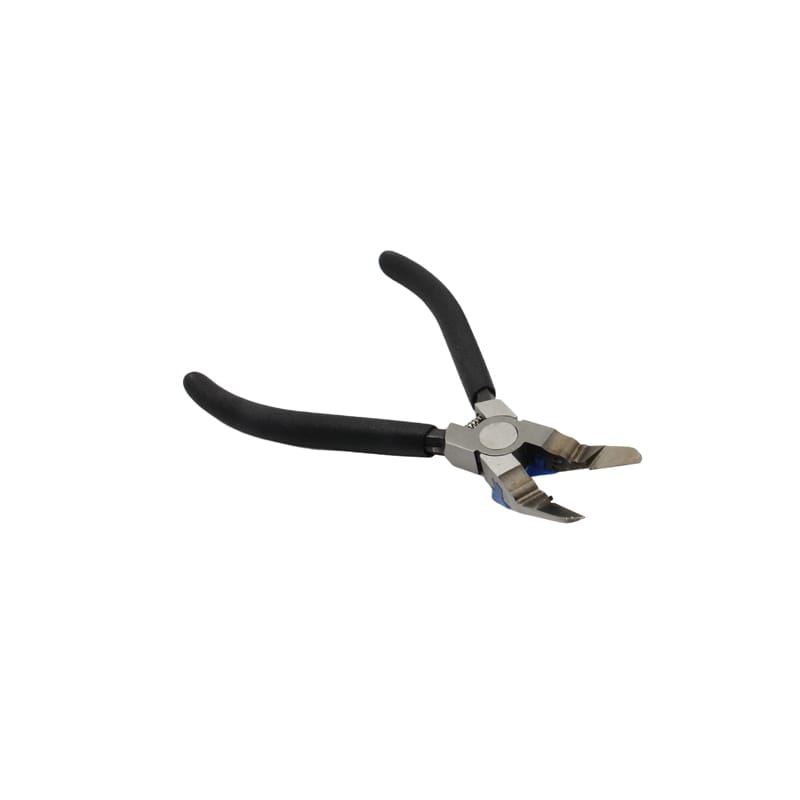
A car trim panel clip remover is most useful when a rigid, narrow lever can reach the fastener directly.
Plastic trim tools are better for creating the first gap on delicate surfaces, while clip pliers are useful when both jaws can reach the fastener and there is enough handle clearance.
| Tool | Best Role | Main Limitation |
|---|---|---|
| Plastic trim tool | Initial access and visible surfaces | Can flex on stubborn clips |
| Metal car trim panel clip remover | Tight, deep, or resistant fasteners | Needs surface protection |
| Clip removal pliers | Direct squeeze-and-lift extraction | Requires jaw and handle clearance |
Fengjie also offers an 8.6″ Upholstery Panel Clip Remover and related upholstery and trim sets, giving workshops several extraction methods for different access conditions.
Eight Mistakes That Damage Clips, Panels, and Molding
1. Starting With the Metal Tool on a Visible Surface
A steel car trim panel clip remover should usually be used after access has been established, not as a blind first-entry tool against delicate trim.
2. Using the Wrong Fork Width
If the fork cannot seat around the fastener, it is more likely to slip or load one side of the clip.
3. Prying Too Far From the Fastener
Panel bending is a warning sign.
Move the working point closer to the clip.
4. Using More Force When the Clip Does Not Move
Unexpected resistance may indicate a hidden screw, hooked trim, a different fastener type, or an incorrect release direction.
5. Twisting the Tool Sideways
Sideways rotation can turn a controlled car trim panel clip remover into a sharp edge pressing against the trim.
6. Reusing a Bent Remover
A deformed fork no longer distributes force as intended and may slide off the fastener.
7. Ignoring Damaged Clips
A fastener that survives removal may still be cracked or permanently distorted.
Inspect before reuse.
8. Letting the Panel Hang After the Final Clip Releases
Support the trim so wiring, connectors, and cables do not become accidental load-bearing components.
Surface Protection When Using Metal Trim Tools
The greatest tradeoff with a steel car trim panel clip remover is the possibility of marking surrounding surfaces.
Risk control starts with tool condition.
Before work, inspect for:
- Burrs
- Chips
- Sharp unintended corners
- Corrosion
- Bent fork tips
- Damaged coating
- Loose handles
Then inspect the work area.
Determine whether the tool will contact:
- Painted metal
- Soft plastic
- Vinyl
- Leather
- Decorative film
- Glass
- Rubber weatherstrip
Where necessary, use an appropriate protective interface and create access with a non-marring tool first.
The tool should pivot on a controlled surface, not randomly against the most visible part of the panel.
The OSHA Hand and Power Tools guidance emphasizes keeping hand tools in safe condition.
For trim work, that basic principle directly supports better surface control because bent, chipped, or damaged tools are more difficult to position predictably.
Ergonomics for Repetitive Clip Removal
A car trim panel clip remover may be used dozens of times during a large interior or body repair.
Tool length and handle design affect how much effort the technician needs to apply.
Important factors include:
- Handle diameter
- Grip texture
- Shaft length
- Working angle
- Distance between the fastener and leverage point
- Required wrist rotation
- Force needed to release the clip
The NIOSH hand-tool selection guide recommends choosing tools that help reduce unnecessary force, repetition, and awkward posture.
For distributors, this means ergonomics should be evaluated during realistic sample use.
A car trim panel clip remover may feel comfortable when held in open space but become awkward when used:
- Under a dashboard
- Along a door sill
- Near a seat
- Inside a cargo compartment
- Close to window molding
Test the product where technicians will actually use it.
What B2B Buyers Should Inspect Before Ordering
A metal car trim panel clip remover appears simple, but small production differences can change how accurately it engages fasteners.
Material and Heat Treatment
Verify the stated steel specification and define appropriate functional requirements.
For Fengjie’s product, the current page identifies the material as 55 steel.
Sample testing should determine whether the tool has enough rigidity and recovery for the intended clip-removal work.
Fork Geometry
Measure:
- Fork opening
- Slot depth
- Tip thickness
- Fork symmetry
- Working-end angle
- Overall width
These are key functional dimensions.
Surface Finish
Inspect:
- Burrs
- Grinding marks
- Sharp unwanted edges
- Coating quality
- Corrosion protection
- Surface consistency
A car trim panel clip remover works close to finished automotive components, so edge control matters.
Shaft Alignment
Place multiple samples side by side.
Check for twisting, bending, or inconsistent working angles.
Handle Retention
If the tool uses a separate handle or grip, test for:
- Rotation
- Pull-off resistance
- Gaps
- Uneven assembly
- Comfortable grip
Batch Consistency
Do not inspect only one approved sample.
Compare several units so the buyer understands normal production variation.
A Practical Sample Test Plan
Before approving a wholesale or private-label order, test the car trim panel clip remover on representative automotive fasteners.
| Test | What to Check | Why It Matters |
|---|---|---|
| Tight-gap access | Working tip enters realistic panel gaps | Confirms usable thickness |
| Clip engagement | Fork seats around several clip sizes | Reduces slipping |
| Extraction control | Clip can be lifted progressively | Confirms leverage geometry |
| Shaft rigidity | Tool does not deform abnormally | Supports repeat use |
| Fork recovery | Tips remain aligned after cycles | Maintains accuracy |
| Surface inspection | No harmful burrs develop | Protects trim |
| Handle stability | Grip remains secure | Improves control |
| Repeat cycles | Performance remains consistent | Reflects workshop use |
| Batch comparison | Samples match key dimensions | Supports repeat supply |
A good car trim panel clip remover should be tested on more than one easy plastic fastener.
Include tighter clips, deeper retainers, and realistic access conditions.
How to Position This Tool in a Professional Product Range
For distributors, the car trim panel clip remover works best as part of a logical trim-service family rather than as an isolated SKU.
A product range can include:
Surface-sensitive access
- Narrow nylon wedge
- Wide panel tool
- Plastic molding remover
Clip extraction
- Metal car trim panel clip remover
- Upholstery remover
- Clip removal pliers
Door and window trim
- Molding tools
- Fastener removers
- Long-reach trim tools
Workshop sets
- Mixed nylon and steel kits
- Multiple fork widths
- Organized storage
This structure gives customers a clear reason to evaluate several related tools.
The Car Body and Interior Tools category can act as the broader landing page for these applications.
OEM and Private-Label Development
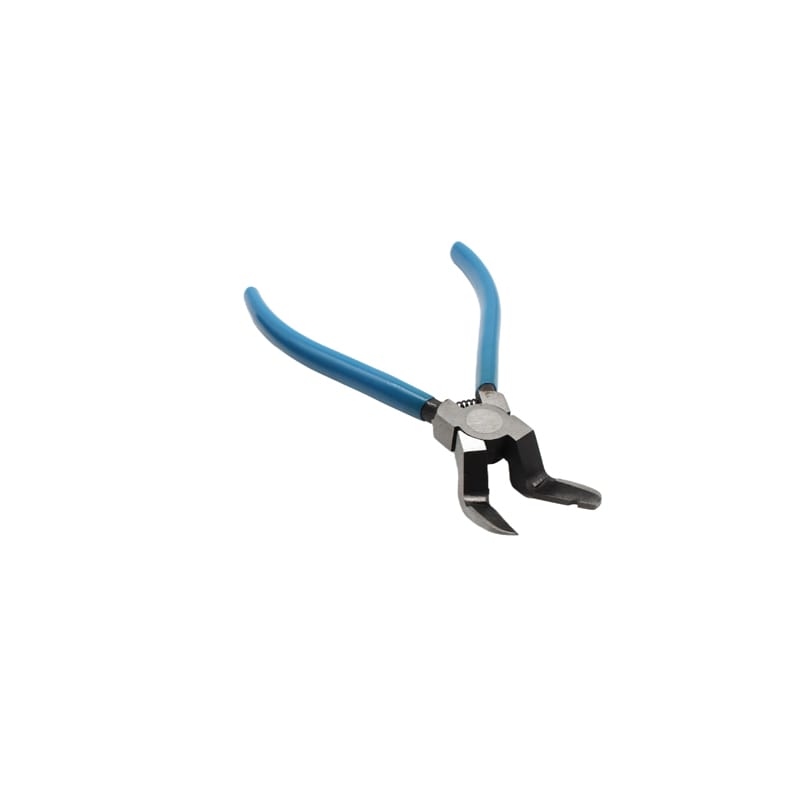
A car trim panel clip remover is suitable for wholesale and private-label programs because the core product can be differentiated through specification and presentation.
Potential OEM variables include:
- Fork opening
- Tool length
- Shaft profile
- Steel specification
- Heat treatment
- Surface treatment
- Handle color
- Grip design
- Logo application
- Packaging
- Barcode and labels
- Multi-piece kit combinations
The best custom project starts with the fasteners and applications the buyer wants to cover.
Instead of asking for a generic “heavy-duty clip remover,” define requirements such as:
- Door-panel push clips
- Window-trim retainers
- Interior fasteners
- Molding clips
- Professional workshop use
- Thin-gap access
That gives the manufacturer a clearer target for the car trim panel clip remover design and provides measurable criteria for sample approval.
Buyers interested in wholesale, OEM, or private-label development can contact Fengjie Tools with intended applications, packaging needs, and target-market requirements.
FAQ
What is a car trim panel clip remover used for?
A car trim panel clip remover is used to release automotive clips, fasteners, retainers, molding attachments, and panel hardware while applying leverage close to the fastener.
Is a metal clip remover better than a plastic trim tool?
Not universally.
Plastic tools are usually better for creating initial access around visible surfaces. A metal car trim panel clip remover provides greater rigidity for tight or deep fasteners.
Can I use a car trim panel clip remover on door panels?
Yes. Door-panel push clips are a common application, provided hidden screws, hooks, and other retention points are identified first.
Can the tool be used around window trim?
Yes. A suitable car trim panel clip remover can work on selected window-trim and molding fasteners, but nearby paint, glass, and rubber surfaces should be protected.
Why does the fork size matter?
The fork needs to fit around or near the clip stem.
A poor fit can make the tool slip, twist the fastener, or place excessive force on the panel.
What steel is used in Fengjie’s clip remover?
The current product specification lists 55 steel.
What should distributors test before bulk ordering?
Test fork dimensions, gap access, clip engagement, shaft rigidity, edge finish, handle retention, repeated-use performance, and batch consistency.
Conclusion
A car trim panel clip remover fills an important gap between flexible nylon pry tools and larger extraction equipment.
Its thin, rigid steel working end can reach fasteners that require more precise and concentrated leverage while allowing the technician to apply force closer to the actual retention point.
The best results come from using the tool as part of a sequence:
- Create access with a surface-friendly tool
- Identify the fastener
- Match the fork to the clip
- Position the remover close to the stem
- Protect surrounding surfaces
- Apply progressive leverage
- Inspect both the clip and tool after removal
For workshops, a good car trim panel clip remover reduces the need to improvise with screwdrivers and gives technicians a stronger option when plastic tools flex too much.
For B2B buyers, the key sourcing factors are steel specification, heat treatment, fork geometry, tip thickness, surface finish, shaft alignment, handle retention, and repeat-production consistency.
Fengjie’s Car Trim Panel Clip Cutter Puller Fastener Rivets Remover is intended for door panels, moldings, window trim, clips, fasteners, emblems, panels, and related automotive trim applications.
Buyers can also explore the wider Car Body and Interior Tools range or contact Fengjie Tools to discuss wholesale, OEM, private-label packaging, and customized automotive trim-removal tool programs.