
Table of Contents
Introduction
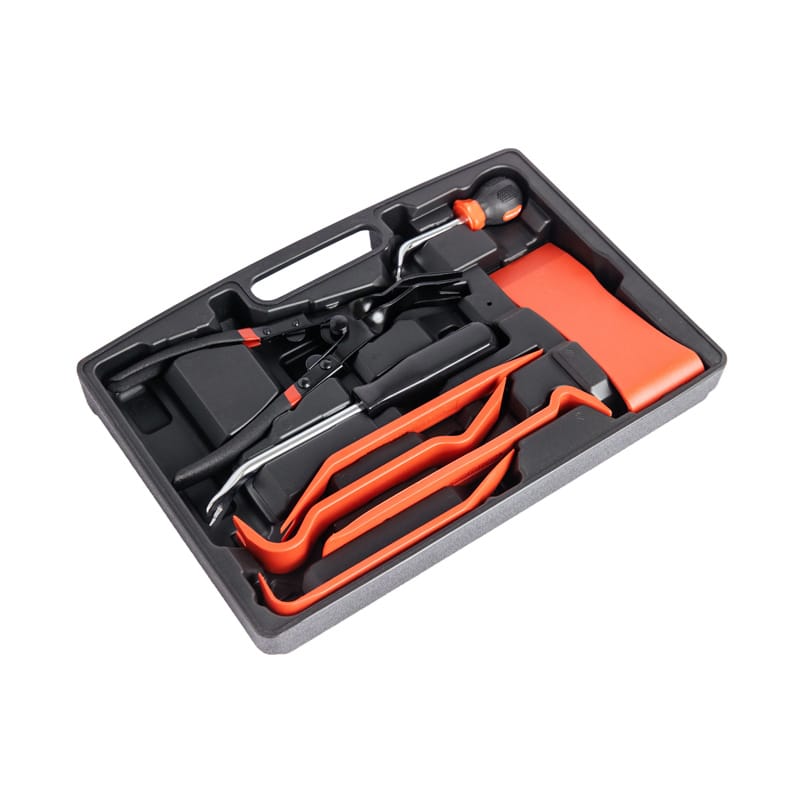
Removing a car door panel looks simple until the first clip breaks, the trim gets scratched, or the panel refuses to come free because a hidden screw was missed.
This is why a proper door panel removal tool has become an essential item for automotive repair professionals, body shops, mobile technicians, and anyone working on vehicle interiors. A door panel often needs to be removed to access window regulators, door lock actuators, speakers, wiring, handles, and other components hidden behind the trim.
Recent repair guides continue to highlight the same problem: using the wrong tool can quickly turn a basic repair into damaged clips, cracked trim, and scratched surfaces. A dedicated trim or panel removal tool is designed to spread force more evenly and help release fasteners with greater control.
The challenge is that not every door panel removal tool is designed for the same job. Some are better for large panel clips, while others are designed for narrow trim gaps, push fasteners, or interior components.
This guide explains how to choose the right door panel removal tool, how to remove a car door panel safely, and how to avoid the mistakes that cause unnecessary damage.
For more professional options used in automotive repair work, you can explore the range of automotive repair tools available from Fengjie Tools.
Why You Should Use a Door Panel Removal Tool Instead of a Screwdriver
A flathead screwdriver may seem like a convenient alternative, but it concentrates force on a very small area.
That can create several problems:
- Scratched interior trim
- Damaged painted surfaces
- Cracked plastic panels
- Broken retaining clips
- Deformed panel edges
A dedicated door panel removal tool is typically shaped to fit between the panel and the door structure while distributing pressure over a wider area.
Recent automotive repair guidance specifically recommends trim panel removal tools because their tapered or shaped ends can help release clips while reducing the risk of cracking or surface damage.
The goal is not simply to pry harder. The goal is to apply force in the right location.
That distinction becomes especially important on modern vehicles, where interior panels may combine multiple types of fasteners, hidden screws, electrical connectors, and integrated trim pieces.
What Is a Door Panel Removal Tool?
A door panel removal tool is a specialized automotive tool used to separate interior door panels and trim components from the vehicle.
Depending on the design, the tool may be used for:
- Releasing door panel clips
- Removing upholstery retainers
- Opening narrow trim gaps
- Removing switch panels
- Releasing push fasteners
- Separating interior mouldings
- Accessing hidden screws
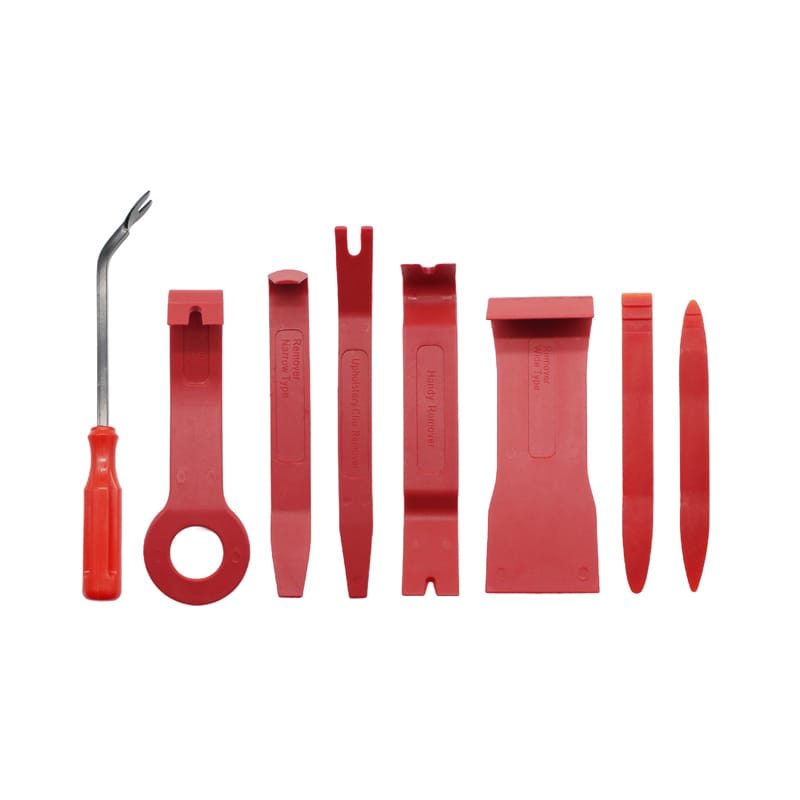
Some tools feature a wide wedge-shaped tip, while others use a forked design that fits around a clip or fastener.
Because door panels can contain different types of retaining systems, professional technicians often use several tools rather than relying on one design for every job.
This makes a door panel removal tool part of a broader automotive trim and interior repair toolkit.
Different Types of Door Panel Removal Tools
Wide Plastic Pry Tools
Wide plastic pry tools are commonly used when separating larger interior trim components.
Their broader contact surface helps distribute pressure and can reduce the risk of concentrated stress on plastic panels.
These tools are particularly useful for:
- Door trim panels
- Dashboard trim
- Interior mouldings
- Switch panels
- Decorative covers
A wide door panel removal tool can be a good choice when the goal is to gradually create a gap without applying excessive force to one point.
Forked Clip Removal Tools
Forked tools are designed to fit around certain types of clips or retainers.
Instead of prying directly against the panel, the forked section can help target the fastener itself.
This can be especially useful when removing:
- Upholstery clips
- Push retainers
- Plastic fasteners
- Interior trim clips
Proper positioning is important. The tool should be placed as close as possible to the clip location rather than pulling aggressively on the middle of the panel.
Narrow Trim Removal Tools
Some door trim pieces have very small gaps.
A narrow door panel removal tool can help create the initial opening needed to insert a wider tool later.
These tools can be useful around:
- Door handle bezels
- Window switch panels
- Small trim covers
- Dashboard components
- Interior control panels
However, narrow tools should be used carefully. Their smaller contact area can create more concentrated pressure if excessive force is applied.
Panel Clip Removal Pliers
Panel clip removal pliers are another useful option for automotive interior work.
They are designed to grip or lift certain clips and retainers with more direct control.
This type of tool can be useful when standard pry tools are not able to reach the fastener effectively.
The growing search interest around related terms such as trim removal tools, clip removal tools, and panel clip removal pliers also reflects how vehicle interior repair increasingly involves specialized tools rather than general-purpose hand tools.
How to Choose the Right Door Panel Removal Tool
Choosing the right door panel removal tool depends on more than simply selecting the strongest material.
Several factors should be considered.
Match the Tool to the Type of Fastener
Different vehicles use different combinations of clips, screws, hooks, and retainers.
Before beginning the job, inspect the panel design and identify the likely fastener locations.
A forked tool may work better for individual clips, while a wide pry tool may be more suitable for separating large trim sections.
Consider the Material of the Tool
Plastic trim tools are often preferred for visible interior surfaces because they can reduce the risk of scratching.
Metal tools may provide greater strength for certain applications, but they require additional care around painted and finished surfaces.
The best door panel removal tool is not always the strongest one. It should provide enough strength while remaining suitable for the material being worked on.
Look at Tool Thickness
Thin tools are useful for narrow gaps.
However, they may not be ideal for releasing large clips that require greater leverage.
A complete set containing different thicknesses and shapes can provide more flexibility.
Check Handle Comfort and Control
Professional technicians may remove multiple door panels during a working day.
Tool ergonomics can affect comfort and control.
A secure grip can help technicians apply steady force rather than sudden pressure.
How to Remove a Car Door Panel Without Damage
The exact process varies between vehicle models, but most door panel removal procedures follow a similar pattern.
Inspect the Door Before Using the Tool
Do not immediately insert the door panel removal tool around the edge of the panel.
First, inspect the entire door.
Look for:
- Hidden screw covers
- Door handle trim pieces
- Armrest screws
- Window switch panels
- Reflectors
- Small plastic covers
Many door panels remain secured by hidden screws even after the clips have been released.
Recent repair guides consistently recommend identifying and removing visible and concealed hardware before attempting to release the panel clips.
Remove Covers and Trim Pieces Carefully
Use an appropriately sized trim tool to create a small gap.
Avoid forcing the trim piece from one side if it is secured by multiple clips.
Instead, gradually work around the edge.
A narrow door panel removal tool can help start the separation, followed by a wider tool if additional leverage is needed.
Remove All Fasteners
Once trim covers are removed, check for screws or bolts underneath.
Door panels may contain fasteners around:
- Door pull handles
- Armrests
- Window switch assemblies
- Lower storage areas
- Interior handle areas
Do not assume that all fasteners are visible.
If the panel does not move freely after several clips have been released, stop and inspect it again.
Start Releasing Clips From a Lower Edge
In many cases, starting near the bottom of the panel provides better access.
Insert the door panel removal tool between the door panel and the metal door structure.
Move carefully toward the location of the first clip.
Instead of twisting aggressively, apply controlled outward pressure until the clip releases.
Then move to the next location.
Working progressively around the panel helps prevent excessive bending.
Multiple repair guides describe starting near the lower edge and working around the perimeter as a common method for releasing door panel fasteners safely.
Lift the Panel Instead of Pulling It Straight Out
After the perimeter clips have been released, the panel may still be connected at the upper edge.
Many vehicle door panels use hooks or channels near the window line.
The correct next step may be to lift the panel upward rather than pulling it directly away from the door.
This is one of the most common points where unnecessary damage occurs.
Always check how the upper section is attached before applying more force.
Disconnect Electrical Connectors Carefully
Modern door panels may include electrical connections for:
- Power windows
- Door locks
- Speakers
- Mirror controls
- Interior lighting
Once the panel is loose, support it before disconnecting the wiring.
Do not allow the panel to hang from electrical connectors.
The Most Common Door Panel Removal Mistakes
Pulling Before Removing Hidden Screws
This is probably the most common mistake.
A technician may release several clips and assume the panel should come off.
When it does not, more force is applied.
The problem is often a hidden screw rather than a stubborn clip.
Always inspect the panel before applying additional pressure.
Prying in the Wrong Location
Using a door panel removal tool in the middle of a large unsupported section can bend or crack the trim.
Try to locate the actual fastener position.
Applying force near the clip is generally more effective than prying against an unsupported section.
Using Excessive Force
If a clip does not release, increasing force is not always the solution.
Stop and check:
- Whether a hidden screw remains
- Whether the tool is near the clip
- Whether the panel needs to be lifted instead
- Whether another fastener type is being used
Controlled movement is more important than brute force.
Using One Tool for Every Job
A narrow pry tool may be excellent for opening a small gap but unsuitable for releasing a large panel clip.
Likewise, a large panel tool may not fit behind a small trim bezel.
Using different tool shapes can make the entire repair process easier.
Why Tool Shape Matters More Than Many Buyers Expect
The shape of a door panel removal tool directly affects how force is transferred.
A wide wedge distributes force.
A forked tool can focus on the fastener.
A thin edge can enter a narrow gap.
A curved design may improve access around certain interior shapes.
This is why a multi-purpose tool set can be useful for automotive repair professionals.
Instead of forcing one tool into every situation, technicians can select the design that best matches the component.
The result can be:
- Better control
- Faster access
- Lower risk of surface damage
- Reduced clip breakage
- Less technician effort
For automotive workshops and tool distributors, this is also an important consideration when selecting products for different repair applications.
Door Panel Removal for Window Regulator Repairs
One of the most common reasons to remove a door panel is to access the window regulator or related door components.
This is particularly relevant for repair shops because the door panel is only the first layer of the repair process.
Behind the panel, technicians may need to access:
- Window regulators
- Window motors
- Door cables
- Glass mounting points
- Wiring connectors
Using the correct door panel removal tool can make the first stage of this repair smoother and reduce the risk of damaging reusable trim components.
This is especially important when working with panels that must be reinstalled after the mechanical repair is completed.
A damaged panel or broken retaining clips can create additional work that was not part of the original repair.
For more tools related to automotive repair and component access, visit Fengjie Tools.
Building a Professional Door Panel Removal Tool Kit
A professional setup does not necessarily require dozens of tools.
However, a practical toolkit should cover several common situations.
| Tool Type | Main Application |
|---|---|
| Wide trim pry tool | Large interior panels and mouldings |
| Narrow pry tool | Tight trim gaps and small covers |
| Forked clip remover | Upholstery and panel fasteners |
| Clip removal pliers | Direct removal of selected retainers |
| Screwdriver and bit tools | Hidden screws and mounting hardware |
| Protective tools | Reducing the risk of surface damage |
The goal is to create a flexible set of tools that can handle different vehicle designs.
A well-selected door panel removal tool collection can also improve workflow efficiency because technicians spend less time searching for alternative methods when one tool does not fit the application.
How Door Panel Removal Tools Help Protect Vehicle Interiors
Vehicle interiors are increasingly complex.
Door panels may combine textured plastic, soft-touch surfaces, decorative trim, electronics, speakers, lighting, and integrated control systems.
This makes surface protection more important than ever.
The correct door panel removal tool can help technicians work with greater precision.
However, the tool alone cannot guarantee a damage-free repair.
Proper technique is equally important.
Technicians should:
- Inspect the panel before starting
- Identify hidden fasteners
- Use the correct tool shape
- Apply gradual pressure
- Work near clip locations
- Support the panel during removal
- Disconnect wiring carefully
Automotive interior trim is designed to fit tightly, but that does not mean every component should be forced.
A systematic removal process is usually faster than repairing damage caused by rushing.
What Professional Buyers Should Consider
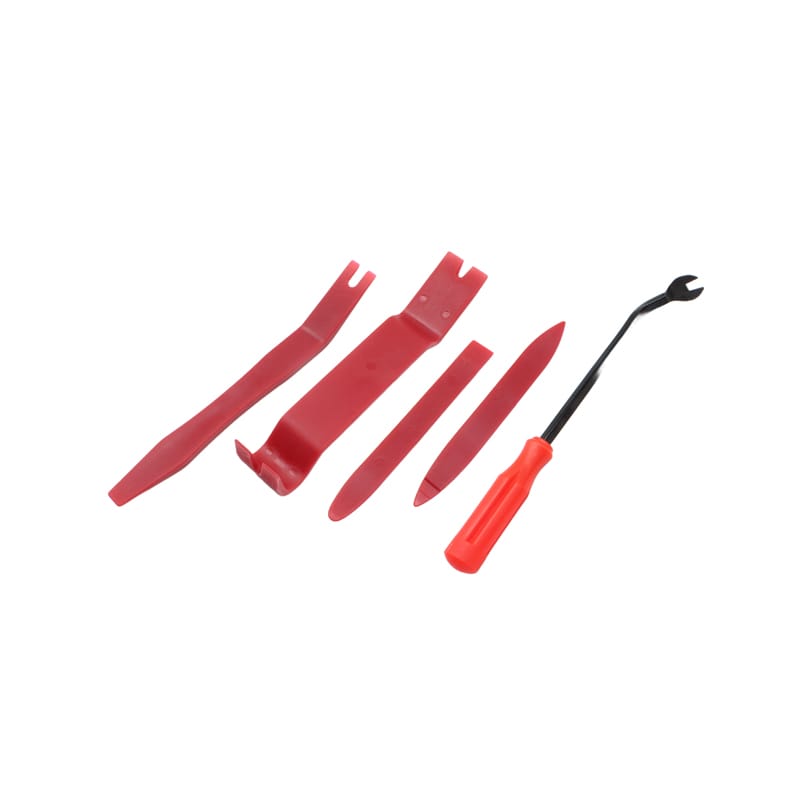
For distributors, repair businesses, and automotive tool buyers, several factors can help determine whether a door panel removal tool is suitable for professional use.
Material Durability
The tool should withstand repeated use without excessive deformation or breakage.
Practical Tool Shapes
A useful product range should include shapes that match real automotive applications.
Surface Protection
Tools used on visible interior surfaces should help reduce the risk of scratching or cracking when used correctly.
Consistent Manufacturing
For distributors and workshop buyers, consistency between batches is important.
Application Flexibility
A tool that can be used for door panels, dashboards, trim pieces, and clips may provide more value across different repair situations.
If you are sourcing automotive tools for professional applications or looking for suitable product options, you can contact Fengjie Tools to discuss product requirements and applications.
FAQ
What is the best tool for removing a car door panel?
The best door panel removal tool depends on the type of clips and trim being removed. Wide pry tools, forked clip removers, and narrow trim tools are commonly used for different parts of the job.
Can I remove a door panel with a screwdriver?
A screwdriver can sometimes release clips, but it increases the risk of scratching or damaging trim and painted surfaces. A dedicated door panel removal tool generally provides better control.
Where should I start when removing a door panel?
Many door panels are best approached from a lower edge after all screws and hidden fasteners have been removed. Work gradually around the perimeter and release clips one at a time.
Why won’t my door panel come off after the clips are released?
The panel may still be secured by hidden screws, upper hooks, electrical connectors, or door handle linkages. Stop and inspect the mounting design before applying more force.
Are plastic trim removal tools strong enough?
For many interior applications, high-quality plastic trim tools provide sufficient strength while reducing the risk of scratches. The correct tool shape and proper technique are equally important.
Conclusion
A door panel removal tool may look simple, but choosing the right design can make a major difference in automotive repair work.
Door panels often provide access to important components such as window regulators, lock actuators, wiring, and speakers. Removing them incorrectly can result in broken clips, scratched surfaces, cracked trim, and unnecessary rework.
The safest approach is to inspect the panel first, remove hidden fasteners, select the correct door panel removal tool, and release clips gradually from the appropriate locations.
For professional automotive repair shops, technicians, and tool distributors, building a flexible collection of trim and panel removal tools can improve efficiency while helping protect vehicle interiors.
Explore automotive repair tool solutions or contact Fengjie Tools for more information about tools for automotive repair applications.