
A flexible claw pickup tool is one of those workshop tools that becomes valuable the moment a screw, clip, nut, washer, connector lock, or small trim part disappears into a place your fingers cannot reach. In automotive door and window repair, those places are everywhere: inside hollow door shells, beneath cowl panels, behind dashboard trim, inside body cavities, and below windshield service areas.
Unlike a magnetic pickup tool, a flexible claw pickup tool does not depend on the dropped part being ferrous. Its spring-operated jaws can grip plastic clips, rubber pieces, small hardware, wiring retainers, and irregular objects. Unlike a pick or hook, it can hold the retrieved object instead of merely nudging it into a better position.
This guide explains how the tool works, where it is most useful in door and windshield-related repair, how to compare shaft length and claw design, when a magnetic tool is better, and what workshops, distributors, and private-label buyers should inspect before sourcing a professional product.
Table of Contents
What Is a Flexible Claw Pickup Tool?
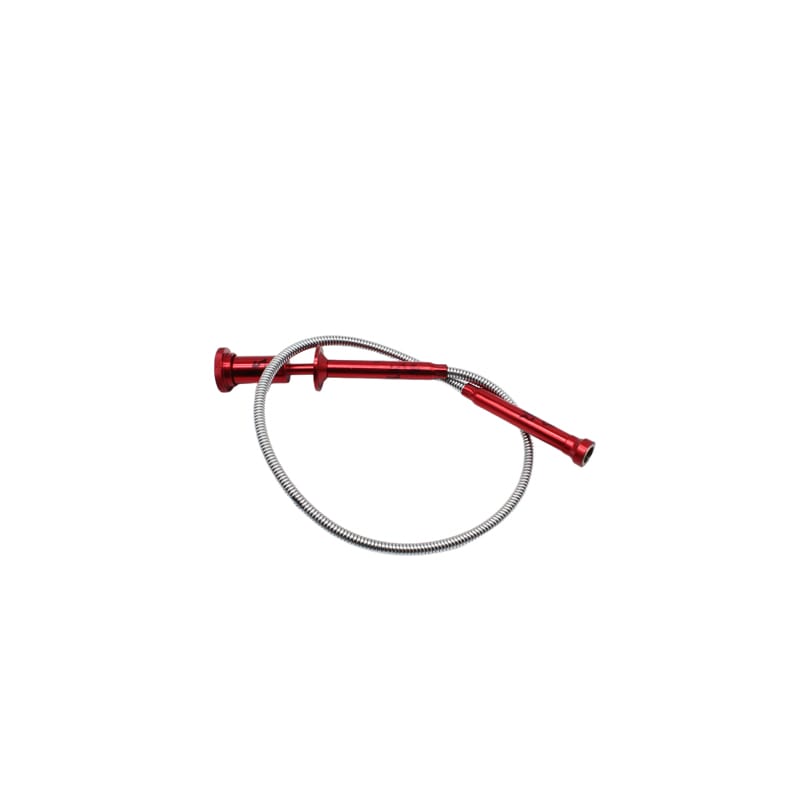
A flexible claw pickup tool is a mechanical retrieval tool built around three main parts:
- A flexible shaft
- A spring-loaded plunger or control
- A retractable multi-jaw claw
Pressing or operating the plunger opens the jaws at the end of the shaft. Releasing it closes the jaws around the target object. Because the shaft can bend, the tool can pass around obstructions and reach components that are not located in a straight line from the access opening.
Fengjie’s 24″ Flexible Spring Claw uses an all-metal construction and a flexible shaft designed for confined areas.
A 24-inch class tool provides enough reach for many door, cowl, dashboard, engine-bay, and body-cavity jobs without becoming a large workshop device.
The most important advantage of a flexible claw pickup tool is mechanical gripping. A magnet only works when the target material responds to magnetism. A claw can retrieve many different shapes and materials as long as its jaws can reach and hold the object.
Why Automotive Door and Window Repair Creates So Many Retrieval Problems
Door and window repairs involve small components in hollow structures.
When a door panel is removed, technicians may handle:
- Plastic clips
- Small screws
- Nuts
- Washers
- Switch-panel fasteners
- Speaker hardware
- Cable clips
- Wiring retainers
- Rubber pieces
- Window-channel components
The outer door skin and inner structure create narrow cavities where dropped parts can be difficult to reach. Windshield and cowl work creates similar problems with wiper hardware, trim clips, molding retainers, and small fasteners.
A flexible claw pickup tool gives the technician another option before larger disassembly begins. The target should still be located with lighting or an inspection mirror before the shaft is guided around brackets, wiring, or other components.
9 Automotive Jobs Where a Flexible Claw Pickup Tool Earns Its Place
1. Retrieving Door Panel Clips From the Bottom of a Door
A door-panel clip can detach during removal and fall through an access opening.
Plastic clips are a perfect example of why a flexible claw pickup tool complements a magnetic pickup tool. Many trim fasteners are non-magnetic, so a magnet cannot recover them.
Use a work light to locate the clip. Shape the flexible shaft before insertion, guide the claw toward the fastener, open the jaws only when the tip is close, and close the claw around a solid section of the clip.
Avoid catching wiring or moisture-barrier material while retrieving it.
2. Recovering Screws After Speaker or Switch Work
Door speakers, switch panels, interior handles, and trim covers often use small screws.
A magnetic tool may work if the screw is made from a suitable material, but access angle may still be difficult. A flexible claw pickup tool can grip the screw head or body even when the path is curved.
This is especially useful when the screw has landed behind a reinforcement section that blocks a straight magnetic pickup tool.
3. Retrieving Window-Channel Hardware
Side-glass service may expose small fasteners and clips around the window channel, regulator, or guide system.
If a component drops into the door cavity, do not move the glass or regulator blindly in an attempt to shake it out.
First locate the object. If it is safe to retrieve without interfering with moving components, use a flexible claw pickup tool through the nearest service opening.
For broader side-glass disassembly, see the Car Window Removal Tool Guide.
4. Recovering Wiper and Cowl Hardware
Before some windshield-service operations, technicians remove wiper arms, cowl covers, clips, and fasteners.
Small hardware can fall beneath the cowl into the plenum area.
A flexible claw pickup tool can be useful when the object is visible but cannot be reached directly.
The flexible shaft allows the technician to approach from an angle instead of removing additional cowl structures immediately.
5. Retrieving Plastic Cowl Clips
This is another job where a magnet may be useless.
Plastic cowl clips can drop below surrounding trim during windshield preparation. If the clip is reusable and visible, the claw can grip the head or stem.
Do not use the flexible claw pickup tool to pull against a clip that is still installed. The tool is for retrieval, not high-force fastener extraction.
6. Recovering Hardware Behind Dashboard Trim
Accessory installation, audio work, interior repair, and trim service can send screws or clips behind dashboard panels.
A flexible shaft can curve around ducts or brackets where a straight grabber cannot reach.
Visibility is critical. Use an inspection mirror or light and understand what is behind the panel before inserting the claw.
7. Picking Up Non-Magnetic Washers and Spacers
Not every washer, spacer, or small bracket is strongly magnetic.
Some components are made from plastic, aluminum, rubber, or other materials.
A flexible claw pickup tool does not need magnetic attraction. If the jaws can surround the component, the tool can retrieve it mechanically.
8. Retrieving Rubber Grommets and Seals
Small rubber components sometimes fall into door or body cavities during trim and wiring service.
A magnet cannot help. A sharp hook may pierce the component.
The claw provides a broader mechanical grip, although the user should avoid crushing soft parts that need to be reused.
9. Recovering Wiring Retainers
Plastic wiring clips and connector locks are easy to drop during door-panel or interior work.
A flexible claw pickup tool can retrieve them without requiring the technician to pull on the wiring harness itself.
Always grip the loose component, not the wire.
Flexible Claw Pickup Tool vs. Magnetic Pickup Tool
These tools are complementary rather than interchangeable.
| Factor | Flexible Claw Pickup Tool | Magnetic Pickup Tool |
|---|---|---|
| Works on steel screws | Yes | Yes |
| Works on plastic clips | Yes | No |
| Works on rubber parts | Yes | No |
| Works on aluminum parts | Usually, if jaws can grip | Usually no |
| Needs physical jaw access | Yes | No direct gripping required |
| Can grip irregular shapes | Often | Depends on magnetic surface |
| Works around curved paths | Yes, with flexible shaft | Depends on tool design |
| Risk of grabbing nearby wires | Requires visual control | Magnet may attract unintended steel items |
A magnet can be faster for a visible steel screw. The technician only needs to bring the magnetic head close enough for attraction.
A flexible claw pickup tool becomes more useful when the object is non-magnetic, positioned behind an obstruction, or requires positive gripping before it can be moved.
Professional workshops benefit from keeping both tools available.
Flexible Claw Pickup Tool vs. Pick and Hook Tools
Fengjie’s Automotive Pick and Hook Set Guide covers precision tools used around seals, clips, wiring tabs, weatherstrips, and confined vehicle components.
A pick and hook set can:
- Lift an edge
- Reposition a clip
- Guide a seal
- Release a small tab
- Pull a part toward an access opening
A flexible claw pickup tool performs a different final action: it closes around the object and carries it out.
If the part is firmly installed, use the correct removal tool.
If the part is already loose and inaccessible, use the retrieval tool.
This distinction matters because a spring claw is not designed to replace a pry bar, fastener remover, or hook used for controlled component release.
Why Shaft Length Matters
Length determines how far the tool can reach, but longer is not automatically better.
24-Inch Flexible Claw Pickup Tool
A 24-inch class flexible claw pickup tool offers a practical middle ground for automotive use.
It can reach:
- Deep door cavities
- Cowl areas
- Under-seat spaces
- Dashboard recesses
- Body cavities
- Engine-bay gaps
Fengjie’s current product is listed as a 24-inch Flexible Spring Claw with an all-metal flexible shaft.
Longer tools can reach deeper areas, but control generally decreases as shaft length increases. Choose the shortest flexible claw pickup tool that can comfortably reach the intended area.
Claw Design: Jaws, Opening Size, and Grip Control
The claw is the working end of the tool.
A practical claw should open wide enough to surround common small parts and close firmly enough to hold them during withdrawal. Buyers should compare finger symmetry, opening size, closing force, tip finish, and plunger travel.
A multi-jaw flexible claw pickup tool can center around irregular objects, but a larger claw head may reduce access through small openings. Head diameter matters as much as maximum jaw opening.
For automotive use, the best design is not necessarily the claw that opens the widest.
It is the claw that fits the intended access opening and still secures common hardware reliably.
Flexible Shaft Design and Maneuverability
The flexible shaft needs to bend around obstacles without collapsing, kinking, or preventing the claw mechanism from operating.
A useful flexible claw pickup tool should maintain claw function while the shaft is curved within its intended range.
During sample testing, check bend control, kink resistance, curved-shaft claw operation, plunger effort, and whether repeated bending damages the outer spring or casing. In door work, the shaft may need to pass around window rails, reinforcement sections, and wiring without becoming difficult to steer.
This is particularly important for professional use because the tool may be bent into different shapes repeatedly throughout its service life.
How to Use a Flexible Claw Pickup Tool Safely
A retrieval tool should reduce disassembly—not create another problem.
Locate the Object First
Do not insert the tool into an unknown cavity and sweep it around randomly.
Use:
- Work light
- Inspection mirror
- Camera where appropriate
- Known access openings
Understand the target and surrounding components.
Pre-Shape the Shaft
If the path bends around an obstruction, form the flexible claw pickup tool into a gentle curve before inserting it.
Avoid forcing an extreme bend after the tip is already inside the cavity.
Keep the Claw Closed During Entry
Where possible, keep the claw in its compact closed position until the working end reaches the target.
This reduces the chance of hooking:
- Wiring
- Insulation
- Weatherstrip
- Sound-deadening material
- Nearby clips
Open the Claw Near the Object
Position the head before operating the plunger.
Then open the jaws, move over the target, and release the plunger so the claw closes.
Test the Grip
Pull gently at first.
If the object slips, reposition rather than increasing withdrawal speed.
Withdraw Slowly
A flexible claw pickup tool holding a part can become wider than it was during insertion.
Guide it carefully through the same path.
Watch for nearby wiring and trim.
Seven Mistakes That Reduce Retrieval Success
1. Using the Tool Without Seeing the Target
Blind probing increases the chance of snagging something that should not move.
2. Trying to Extract an Installed Fastener
The claw is a retrieval tool, not a high-force clip remover.
Use a dedicated trim or fastener tool first.
3. Selecting a Tool That Is Too Long
Excess shaft length can reduce control in shallow jobs.
4. Opening the Claw Too Early
Open jaws can catch wires or insulation during insertion.
5. Crushing a Reusable Plastic Part
Use only enough grip to hold the target securely.
6. Pulling Against an Obstruction
If the part will not pass through the opening, stop and change its orientation.
Do not force it through a smaller gap.
7. Using a Damaged Flexible Shaft
A kinked or damaged flexible claw pickup tool can become difficult to steer and may not operate the claw correctly.
Safety Around Door Glass, Wiring, and Moving Components
Door cavities can contain glass, regulator cables, motors, wiring, lock rods, speakers, and reinforcement structures. Before inserting a flexible claw pickup tool, determine what can move and keep the tool clear of operating windows, seats, wipers, or other mechanisms.
The OSHA Hand and Power Tools guidance emphasizes keeping hand tools in safe condition and using tools appropriately for the task.
For retrieval work, inspect the plunger, shaft, claw fingers, and handle before use. A damaged claw can release a retrieved object unexpectedly inside the cavity.
Ergonomics: Plunger Force and Handle Control
A flexible claw pickup tool is normally used for short retrieval tasks, but handle design still affects precision.
Important factors include:
- Plunger resistance
- Handle diameter
- Finger contact area
- Plunger travel
- Shaft stiffness
- Tool balance
The NIOSH Guide to Selecting Non-Powered Hand Tools recommends considering force, grip, repetitive movement, and working posture when selecting hand tools.
If the plunger requires excessive finger force, users may struggle to open the claw accurately when reaching deep into a cavity.
A smooth mechanism improves both comfort and tip control.
What B2B Buyers Should Inspect Before Bulk Ordering
A flexible claw pickup tool looks mechanically simple, but several production details influence performance.
Check shaft material, diameter, length, bend control, kink resistance, and finish. Fengjie’s current 24-inch product is described as all metal with a flexible shaft for confined areas.
Also inspect claw symmetry and closing force, then cycle the plunger repeatedly. The action should remain smooth without sticking or grinding, and the handle should stay secure. Because door cavities can be damp, corrosion protection also matters.
For repeated orders, buyers should keep approved dimensional and functional reference samples so new production can be compared against the original specification.
A Practical Sample Test Plan
| Test Area | What to Check | Why It Matters |
|---|---|---|
| Shaft reach | Tool reaches intended automotive cavities | Confirms application fit |
| Bend control | Shaft curves without kinking | Supports maneuverability |
| Claw opening | Jaws open consistently | Ensures reliable pickup |
| Grip test | Tool holds plastic, steel, rubber and irregular parts | Confirms material-independent retrieval |
| Plunger feel | Mechanism operates smoothly | Improves precision |
| Curved operation | Claw still works when shaft is bent | Critical for real use |
| Repeated cycles | Mechanism remains stable | Reflects workshop use |
| Surface finish | No dangerous burrs or loose wire edges | Improves safety |
| Batch comparison | Multiple samples match length and operation | Supports repeat supply |
An automotive supplier should test the flexible claw pickup tool on representative objects rather than only checking whether the claw opens in free space.
Useful test pieces include:
- Door-panel clips
- Small screws
- Plastic retainers
- Rubber grommets
- Nuts
- Washers
- Connector locks
How to Position the Product in an Automotive Door & Glass Tool Range
A flexible claw pickup tool works best as a support product within a broader repair category.
A door-and-window service range can include:
Access tools
- Plastic trim removers
- Door-panel tools
- Clip removers
Precision tools
- Pick and hook sets
- Inspection mirrors
- Flexible claw pickup tools
Windshield preparation
- Wiper arm pullers
- Molding removers
- Cowl tools
Glass removal
- Cold knives
- Windshield removal tools
This structure helps customers understand why the products belong together. The Car Body and Interior Tools category can support the broader door/interior range, while Fengjie’s Pick & Hook category provides related precision tools.
OEM and Private-Label Opportunities
A flexible claw pickup tool can be sold individually or included in a professional retrieval set.
Potential customization areas include:
- Overall length
- Shaft diameter
- Claw opening
- Handle design
- Plunger color
- Surface finish
- Logo
- Retail card
- Blister packaging
- Barcode
- Multilingual instructions
- Storage pouch
- Combination with magnetic pickup tools
For a private-label project, define the target user before finalizing the specification. Workshop buyers may prioritize shaft strength, smooth plunger action, reliable claw force, corrosion resistance, and reach. A door-and-glass service kit can combine a flexible claw pickup tool with an inspection mirror and other precision tools.
Buyers can contact Fengjie Tools to discuss wholesale, OEM, private-label packaging, and customized retrieval-tool programs.
FAQ
What is a flexible claw pickup tool used for?
A flexible claw pickup tool retrieves small objects from confined spaces using a bendable shaft and spring-operated gripping jaws.
Common automotive targets include screws, clips, nuts, washers, plastic retainers, rubber pieces, and small hardware.
Is a flexible claw pickup tool better than a magnetic pickup tool?
It is better for non-magnetic objects such as plastic clips and rubber components.
A magnetic tool can be faster for ferrous screws or nuts. Many workshops benefit from having both.
Can a flexible claw pickup tool be used inside a car door?
Yes. It can retrieve loose parts inside door cavities when the target is visible and the tool can be inserted without interfering with glass, wiring, regulator parts, or other components.
Can it remove installed door-panel clips?
A flexible claw pickup tool is designed for retrieval, not high-force fastener removal.
Use a dedicated clip or trim remover to release installed fasteners.
Is 24 inches a useful automotive length?
A 24-inch class tool provides useful reach for many door cavities, cowl areas, dashboard recesses, and under-seat spaces while remaining manageable for workshop storage.
Can the tool retrieve plastic parts?
Yes. Mechanical claws do not depend on magnetism, which is one of the main advantages of a flexible claw pickup tool.
What should distributors test before ordering?
Buyers should test shaft flexibility, kink resistance, claw symmetry, jaw opening, grip strength, plunger smoothness, curved-shaft operation, finish, corrosion protection, and batch consistency.
Can flexible claw pickup tools be customized?
Depending on manufacturing capability, buyers may specify length, shaft design, handle, finish, packaging, logo, instructions, and kit combinations.
Conclusion
A flexible claw pickup tool solves a common workshop problem that larger repair tools cannot: retrieving small loose components from places where fingers, magnets, and rigid tools do not work.
In door and window repair, it can recover plastic clips, screws, washers, grommets, wiring retainers, and other parts from hollow door structures and tight body cavities. Around windshield and cowl work, it can retrieve small hardware that falls below accessible trim.
Its key advantage is material-independent gripping. A magnet relies on magnetic attraction. A flexible claw pickup tool closes mechanically around the object, making it useful for steel, plastic, rubber, aluminum, and irregular parts that fit within the claw.
For technicians, successful use depends on locating the target first, shaping the shaft for the access path, opening the claw only near the object, testing the grip, and withdrawing slowly.
For workshops, a 24-inch flexible tool can complement inspection mirrors, magnetic pickup tools, pick-and-hook sets, trim removers, and clip tools.
For distributors and private-label buyers, the main sourcing factors are shaft construction, bend control, claw symmetry, gripping force, plunger smoothness, corrosion protection, repeated-cycle durability, and production consistency.
Fengjie’s 24″ Flexible Spring Claw uses an all-metal flexible shaft designed for confined areas. Buyers can combine it with related body/interior and precision hand tools to build a more complete automotive door, window, and workshop retrieval range.
For wholesale, OEM, private-label packaging, or customized flexible claw pickup tool programs, contact Fengjie Tools with the target market, preferred length, packaging, and application requirements.