
Removing bonded automotive glass is not simply a matter of finding the sharpest blade and cutting through the adhesive.
The technician may be working around a painted pinchweld, dashboard trim, headliner material, sensors, wiring, exterior moldings, clips, or a windshield that needs to be removed intact. At the same time, modern automotive glass can be tightly bonded into the vehicle structure, leaving very little working space between the glass edge and body.
That is why professional workshops rarely rely on one universal windshield removal tool.
Depending on the vehicle and the job, technicians may use cutting wire, cutting cord, a cold knife, pull handles, powered cutting equipment, trim removal tools, scrapers, suction tools, or a combination of several methods.
The better question is therefore not:
“What is the strongest windshield removal tool?”
It is:
“Which removal method gives the best balance of access, cutting control, glass protection, vehicle protection, and workshop efficiency for this job?”
For repair shops, automotive glass installers, distributors, and professional tool buyers, understanding that difference is essential when building a useful auto glass tool range.
Table of Contents
Why Windshield Removal Requires More Control Than It Appears
Most bonded windshields are retained by an adhesive system around the perimeter of the glass. During removal, that bond must be separated without creating unnecessary damage to the vehicle body or nearby interior and exterior components.
This creates several challenges at the same time:
- The adhesive bead may vary in thickness around the windshield.
- Access can be very limited near the dashboard.
- Exterior molding may cover the glass edge.
- Clips and retainers may sit close to the cutting path.
- Interior trim can restrict tool movement.
- The windshield may need to remain intact for reuse, inspection, or controlled handling.
- A cutting tool can contact the painted pinchweld if the working angle is incorrect.
The Auto Glass Safety Council maintains the ANSI/AGSC/AGRSS 005-2022 Automotive Glass Replacement Safety Standard, which addresses procedures, product performance, technician education, and other critical areas of replacement work.
This is important because windshield replacement is part of a safety-related repair process, not simply cosmetic body work.
The windshield removal tool should therefore help technicians separate the existing glass in a controlled way while preparing the vehicle for the next stages of the replacement process.
The Main Types of Windshield Removal Tools
Professional automotive glass removal can involve several different tool systems. Each works differently and has advantages in specific situations.
The four most important categories are:
- Wire or cutting-cord systems
- Cold knife windshield tools
- Traditional two-person wire handles
- Powered windshield cutting tools
These are not always direct substitutes for one another.
A professional shop may need more than one windshield removal tool because vehicle design, adhesive access, glass condition, and technician working environment can change from job to job.
Wire Windshield Removal Tool Systems
Wire-based removal has become an important method for bonded automotive glass because the cutting medium can travel through narrow spaces between the glass and the body.
The basic principle is simple: wire or specialized cutting cord is positioned around or through the adhesive bead and then pulled through the bond.
Depending on the tool design, pulling force may be generated manually or through a controlled winding mechanism.
Why Wire Systems Are Popular
A wire windshield removal tool can provide several advantages:
- Access to narrow adhesive gaps
- Reduced need to insert a large blade deep into the bond
- Controlled cutting direction
- Ability to work around curved windshield sections
- Potentially lower contact with painted body surfaces when positioned correctly
- Useful operation from inside the vehicle on some systems
Wire systems are especially valuable when the technician wants greater control over the cutting path.
Steel Wire vs Synthetic Cutting Cord
Not every wire-style system uses the same cutting material.
Traditional systems may use braided, square, twisted, or other forms of metal cutting wire. Other systems use high-strength synthetic cutting cord.
Metal wire generally provides aggressive cutting performance, but careless positioning may increase the possibility of contacting surrounding surfaces.
Synthetic cutting line can offer a different balance of flexibility and surface interaction.
For professional buyers, the question should not simply be whether a kit “contains wire.” Important evaluation points include:
- Wire construction
- Tensile strength
- Flexibility
- Resistance to premature fraying
- Grip compatibility
- Ease of threading through the adhesive
- Cutting consistency
- Replacement availability
A low-quality cutting line can become one of the weakest components in an otherwise well-designed windshield removal tool kit.
Traditional Wire Handle Windshield Removal Tools
One of the simplest automotive glass removal arrangements uses cutting wire with two handles.
The wire passes through the windshield adhesive, and technicians pull the handles back and forth to work through the bond.
This method has been used for many years because the equipment is simple and adaptable.
A basic set may contain:
- Cutting wire
- Two wire-grip handles
- Wire insertion or piercing tool
- Cutting or trimming accessories
Where This Type Works Well
Traditional handle systems can be useful when:
- Two technicians are available
- The adhesive is accessible
- The cutting path is relatively straightforward
- A compact, simple tool set is preferred
- The workshop wants a basic automotive glass removal kit
However, the method depends heavily on technician coordination.
If pulling angles become too aggressive, the wire can move toward interior trim or the vehicle body.
For B2B buyers, handle design matters more than it may appear. A professional windshield removal tool handle should hold the cutting wire securely without forcing the technician to wrap exposed wire around the hand.
Grip comfort, wire retention, and easy wire installation should all be examined during sample testing.
Cold Knife Windshield Removal Tool
A cold knife uses a shaped blade that is manually pulled through the urethane adhesive around the windshield.
It remains one of the most recognizable automotive glass removal tools.
The technician inserts the blade between the glass and body, establishes the correct cutting angle, and pulls the knife along the adhesive bead.
Advantages of a Cold Knife
A cold knife can offer:
- Fast cutting in accessible areas
- Simple mechanical construction
- No electrical or pneumatic power requirement
- Compact workshop storage
- Easy blade replacement
- Good technician feedback during the cut
For experienced technicians, it can be an efficient windshield removal tool when there is sufficient access around the glass.
Limitations of Cold Knife Removal
The blade must physically enter the bonding area.
That makes blade depth, handle angle, and clearance extremely important.
Potential problems include:
- Scratching the pinchweld
- Damaging molding
- Cutting interior material
- Excessive blade flex
- Difficulty reaching deep adhesive locations
- Reduced control in tight corners
The blade should therefore be matched to the working space rather than selected only by length.
A longer blade is not automatically better.
How Cold Knife Blade Shape Changes Cutting Performance
The geometry of the blade affects the way force reaches the adhesive.
Professional buyers should inspect several characteristics.
Blade Length
A longer blade can reach deeper adhesive locations, but it also creates more leverage and may become harder to control.
Shorter blades provide greater stiffness for accessible bonds.
Blade Width
Wider blades can provide greater stability but require more clearance.
Narrow blades may access tighter areas.
Cutting Edge
The edge must remain sharp enough to cut adhesive without forcing excessive pulling pressure.
A dull windshield removal tool blade can increase technician fatigue and cause the operator to use more aggressive movement.
Blade Attachment
The connection between blade and handle should resist movement under repeated pulling loads.
Loose blade retention can reduce accuracy and create an unnecessary safety risk.
For distributors, offering several replacement blade sizes can make a cold knife product line more practical than offering only one fixed blade configuration.
Powered Windshield Removal Tools
Powered cutting tools use electric, battery, pneumatic, or reciprocating movement to separate bonded glass.
They can improve productivity in some professional environments, particularly when technicians perform repeated glass removal throughout the day.
Powered options may use:
- Oscillating blades
- Reciprocating blades
- Specialized cutting attachments
- Controlled powered pull systems
The main benefit is reduced manual cutting effort.
However, powered movement does not eliminate the need for control.
In fact, an incorrect blade position can cause damage faster because the tool generates repeated movement automatically.
A powered windshield removal tool is therefore most useful when the operator understands blade positioning, surrounding components, and appropriate cutting speed.
Wire vs Cold Knife vs Powered Windshield Removal Tool
There is no universal winner.
The best choice depends on how the windshield is bonded and how much access exists around the glass.
| Factor | Wire / Cord System | Cold Knife | Powered Cutter |
|---|---|---|---|
| Tight adhesive access | Excellent | Moderate | Depends on blade |
| Manual effort | Moderate | Moderate to high | Lower |
| Initial tool complexity | Moderate | Low | Higher |
| Cutting control | High when properly routed | High with experienced operator | Depends strongly on operator |
| Risk near painted surfaces | Lower with correct routing | Higher if blade contacts body | Depends on blade path |
| Curved glass areas | Good | Moderate | Tool dependent |
| Single-technician operation | Possible with suitable system | Yes | Yes |
| Consumable requirement | Wire or cord | Replacement blades | Replacement blades/accessories |
| Training requirement | Moderate | Moderate | Moderate to high |
| Best use | Controlled bonded-glass cutting | Accessible adhesive beads | High-frequency professional work |
For an auto glass shop, the strongest setup is often not choosing one technology exclusively.
It is building a tool system that covers different vehicle conditions.
How to Choose a Windshield Removal Tool by Job Type
The vehicle should determine the tool—not the other way around.
Before beginning removal, technicians should examine the working environment.
Large Open Bonding Area
When the adhesive is easy to access and there is enough room for controlled blade movement, a cold knife can be highly efficient.
Tight Dashboard Clearance
A wire or cord-based windshield removal tool can often provide better access because the cutting medium occupies less space than a large blade and handle.
Windshield Must Be Removed Intact
When preserving the glass is important, technicians should prioritize controlled cutting and avoid excessive glass loading.
Wire systems can be particularly useful because force can be distributed around the adhesive rather than concentrated through aggressive prying.
High-Volume Auto Glass Shop
A shop completing many replacements each day may benefit from combining manual and powered systems.
For example:
- Wire system for difficult access
- Cold knife for fast accessible sections
- Powered cutting tool for repeated heavy-duty work
- Specialized trim and molding tools for preparation
This reduces the temptation to force one windshield removal tool into every application.
Do Not Ignore Windshield Molding and Trim
The windshield itself is only part of the job.
Before cutting begins, technicians may need to remove:
- Exterior windshield molding
- Cowl panels
- Wiper arms
- A-pillar trim
- Retaining clips
- Weatherstrips
- Decorative strips
- Interior covers
Poor preparation can create damage before the adhesive is even touched.
A screwdriver may appear convenient for lifting trim, but concentrated metal edges can mark plastic, paint, or molding.
Dedicated trim tools spread force more predictably.
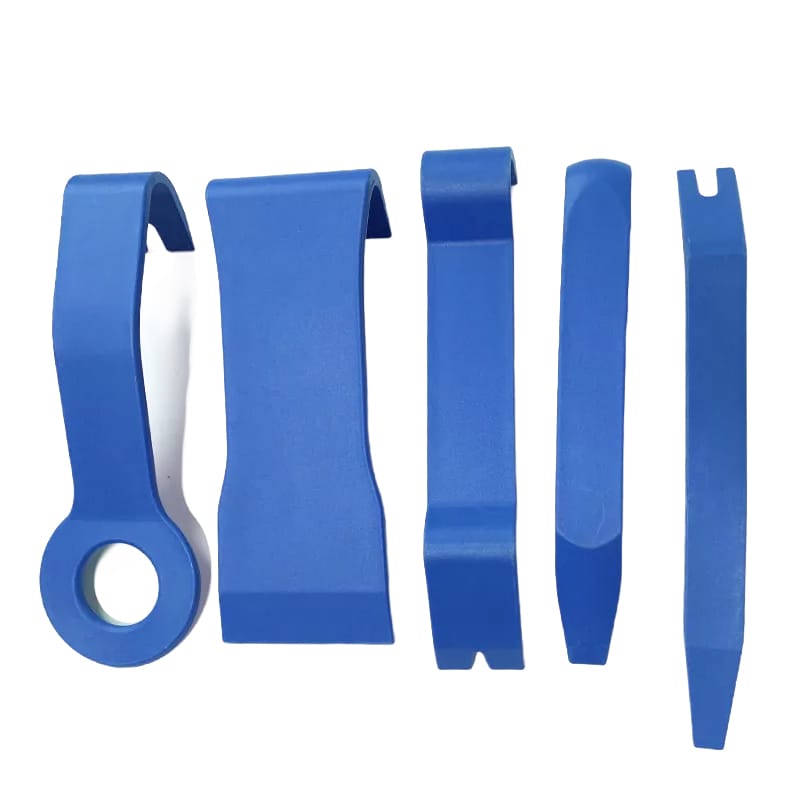
Fengjie offers a 5pcs Trim Fastener & Molding Removal Tool Kit designed for window and door trim removal and windshield molding work.
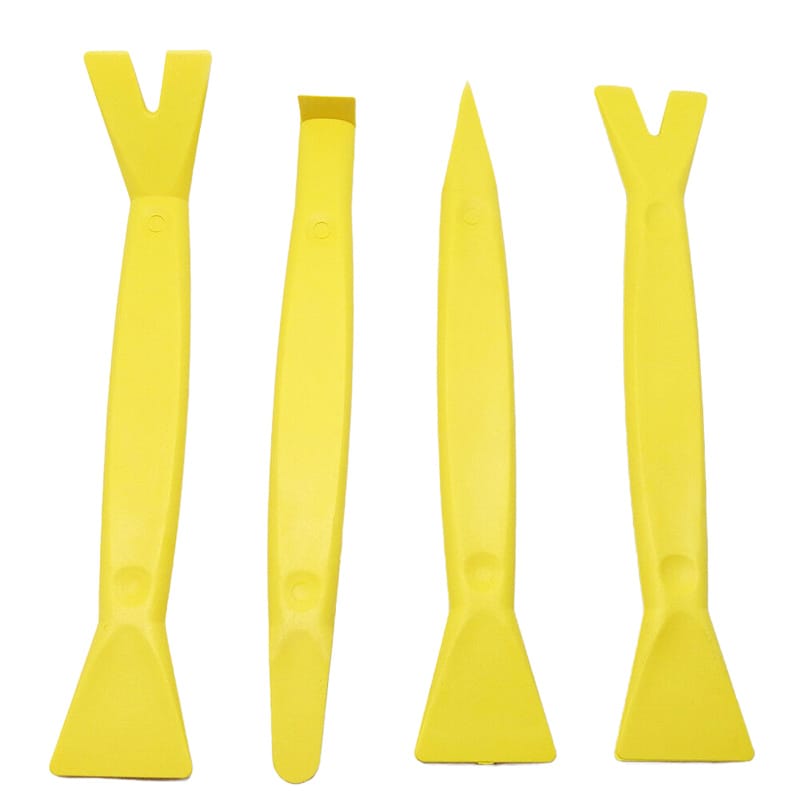
For broader panel access, the 4pcs Plastic Auto Car Door Panel Trim Removal Tools Kit provides different remover shapes for interior and exterior trim.
For professional buyers, this is an important merchandising point: a windshield removal tool should often be sold as part of a glass-removal workflow rather than as an isolated cutting product.
Adhesive Access Determines More Than Tool Power
One of the biggest mistakes in windshield removal is assuming that a difficult cut requires more force.
Often, the real problem is poor access or an incorrect cutting angle.
Before increasing pulling pressure, evaluate:
Adhesive thickness
A thick adhesive bead increases cutting resistance and may require a different wire path or blade depth.
Glass-to-body distance
Very narrow clearance can limit cold knife access.
Previous replacement work
Previous adhesive application may differ from the original bead geometry.
Corner geometry
Tight windshield corners can change the direction of the cut and increase friction.
Molding location
Hidden clips or molding retainers may interfere with tool movement.
Temperature
Adhesive behavior can change with working conditions, affecting cutting effort.
The best windshield removal tool gives the technician enough control to respond to these conditions instead of simply increasing force.
Why Protecting the Pinchweld Is Critical
The pinchweld is the body area where bonded glass is retained.
During windshield removal, careless cutting can expose or damage painted surfaces.
That matters because the bonding area will be used again when replacement glass is installed.
The Auto Glass Safety Council’s current replacement standard includes vehicle assessment, selection of retention systems, adhesive-bonded glass installation requirements, and technician procedures. Read the AGRSS standard overview.
For removal tools, the practical lesson is straightforward:
The objective is to cut the adhesive, not the vehicle.
Tool suppliers should therefore evaluate how easily a product allows the operator to control cutting depth and cutting direction.
How Much Old Urethane Should Be Removed?
After the glass has been removed, technicians normally need to prepare the remaining bond area according to the adhesive-system instructions and applicable installation procedure.
This is where scraper-type tools become important.
A scraper can help trim residual material while providing more surface control than an aggressive cutting tool.
However, the goal should not be to randomly strip the bonding area back to bare metal.
The correct preparation method depends on the condition of the existing bond and the instructions associated with the retention system.
The Auto Glass Safety Council provides detailed industry guidance around automotive glass replacement procedures and adhesive-bonded installation. Auto Glass Safety Council replacement information.
For more information about matching scraper designs to automotive surfaces, see Fengjie’s Automotive Scraper Tool Guide.
A Complete Windshield Removal Tool Kit Should Cover More Than Cutting
Professional users rarely complete windshield removal with one tool.
A practical kit or product range can include several functional groups.
Molding and Trim Tools
Used to release trim, clips, cowl components, and decorative pieces before glass cutting.
Wiper Arm Removal Tools
Some vehicles require wiper arms to be removed before the cowl can be accessed.
Cutting Wire or Cord
Used to separate the bonded adhesive.
Wire Handles
Provide controlled manual pulling.
Wire Insertion Tool
Helps route the cutting material through the adhesive.
Cold Knife
Provides fast manual cutting in accessible areas.
Replacement Blades
Different lengths and profiles improve application coverage.
Scraper Tools
Used during bond-area preparation and residue removal.
Suction Handling Tools
Help technicians control large glass panels during removal and installation.
Protective Accessories
Dashboard guards and surface protectors can help isolate interior areas from the cutting path.
For distributors, this workflow-based approach creates a much stronger product category than listing unrelated auto glass tools separately.
What Professional Buyers Should Check Before Ordering
For wholesalers and private-label buyers, evaluating a windshield removal tool only from photos is risky.
Real-use testing should examine function under load.
Handle Strength
Wire handles and cold knife handles should remain rigid when significant pulling force is applied.
Inspect:
- Handle material
- Grip texture
- Connection points
- Fastener retention
- Surface finish
- Ergonomic shape
Wire Retention
Wire must remain secure inside the handle.
A poorly designed locking mechanism can allow the cutting wire to slip during operation.
Cutting Wire Consistency
Check several samples from the same production batch.
Look for:
- Diameter consistency
- Surface uniformity
- Broken strands
- Premature fraying
- Unexpected stretching
Blade Hardness and Edge Retention
Cold knife and powered-tool blades need enough hardness to maintain a useful cutting edge without becoming excessively brittle.
Blade Fit
Replacement blades should attach consistently without excessive play.
Tool Finish
Sharp burrs around handles, plates, clamps, or metal components should not be accepted.
Packaging
A professional windshield removal tool kit should keep sharp blades and cutting wire organized during transport.
A molded case, pouch, or dedicated compartment system can also help workshops identify missing components quickly.
Why Tool Ergonomics Matter in Auto Glass Work
Windshield removal can involve repeated pulling, awkward arm positions, and long periods of hand-tool use.
That means handle design influences more than appearance.
An effective handle should provide:
- Enough surface area for the hand
- Non-slip grip
- Rounded pressure points
- Good pulling alignment
- Space for gloved operation
- Secure wire or blade control
A handle that works during one demonstration may become uncomfortable after repeated daily use.
For B2B sourcing, sample evaluation should therefore include repeated-operation testing rather than a single cut.
Manual vs Powered Tools for Professional Shops
A powered tool can increase productivity, but not every workshop needs to replace manual systems.
Consider the actual service environment.
Manual Tools Make Sense When:
- Job volume varies
- Portability is important
- Technicians work remotely
- Access differs widely between vehicles
- The shop wants fewer powered components
- Tool maintenance needs to remain simple
Powered Tools Make Sense When:
- Removal volume is consistently high
- Technician fatigue is a concern
- The same general workflow is repeated frequently
- Power supply or batteries are readily available
- The staff receives appropriate equipment training
A distributor targeting professional users may benefit from offering both categories instead of marketing one as the “best” windshield removal tool for every shop.
Automotive Side Window and Door Glass Work Needs Different Tools
A windshield content strategy should connect naturally with other automotive glass and door repair tasks.
Side window service can require:
- Door panel removal
- Weatherstrip removal
- Clip extraction
- Regulator access
- Glass handling tools
- Hook and pick tools
- Fastener removers
- Scrapers
- Trim wedges
The cutting tools used for a bonded windshield may not be required for a mechanically retained door glass assembly.
This distinction is important for both SEO and product planning.
“Automotive glass removal tools” should therefore not be treated as one single tool type.
A complete professional range can be divided into:
| Work Area | Typical Tool Groups |
| Windshield removal | Wire, cold knife, cutters, molding tools |
| Back glass removal | Wire systems, cutting tools, trim tools |
| Quarter glass removal | Compact cutting tools, wire systems |
| Door glass access | Panel tools, clip tools, hook tools |
| Window trim service | Plastic wedges, molding removers |
| Adhesive preparation | Scrapers and trimming tools |
| Glass handling | Suction and positioning tools |
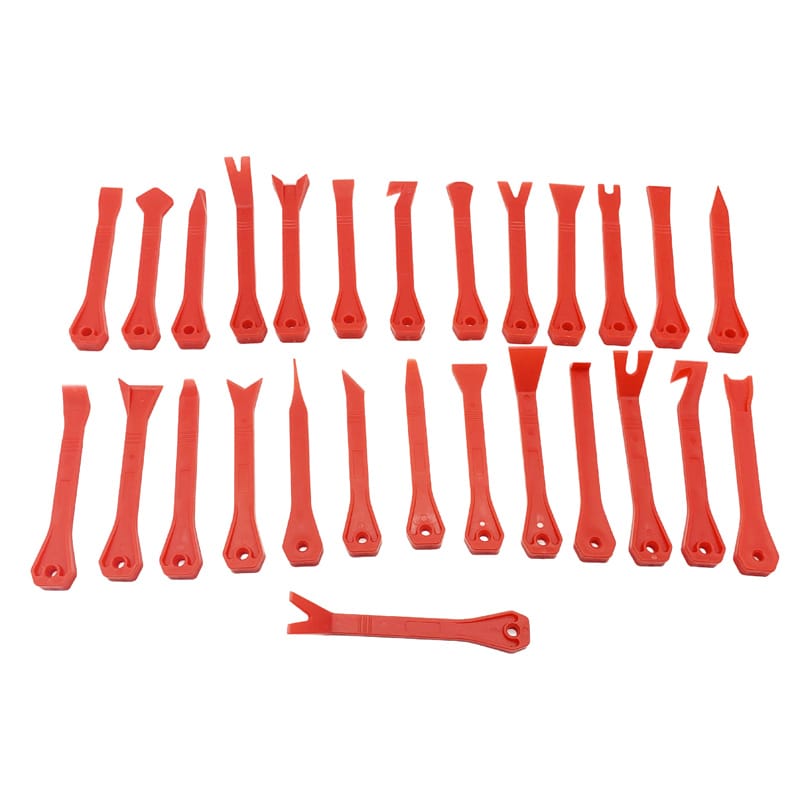
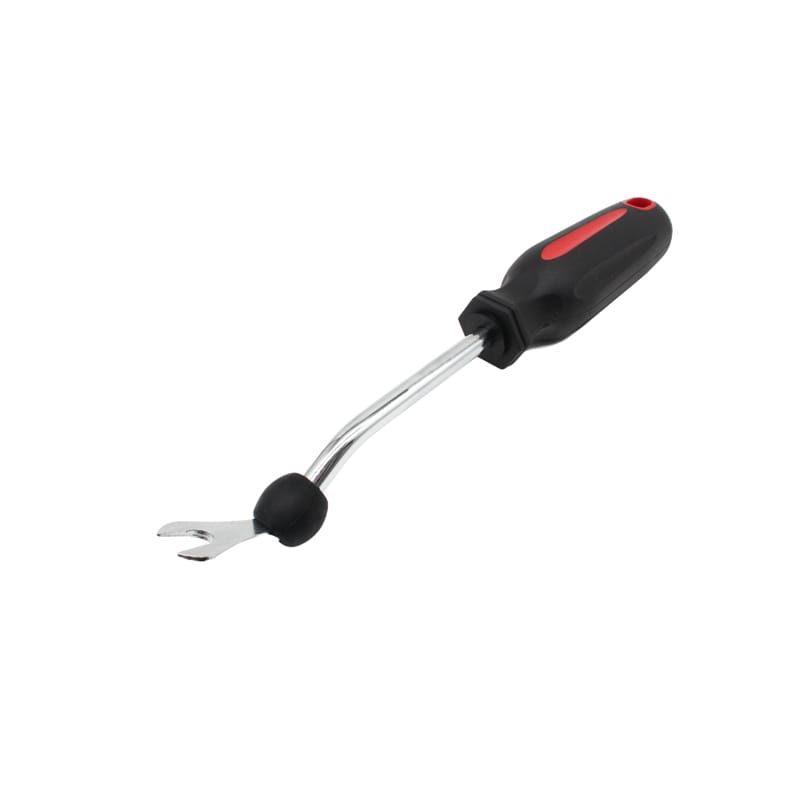
Fengjie’s Car Trim Panel Clip Cutter Puller Fastener Remover is relevant to door panels, window trim, clips, fasteners, and related vehicle trim work.
Common Windshield Removal Mistakes
Even a high-quality windshield removal tool cannot compensate for an incorrect process.
Several mistakes repeatedly create problems.
Cutting Before Removing Obstructions
Hidden molding or clips can interfere with the cutting path.
Prepare the surrounding area first.
Pulling Wire at the Wrong Angle
The cutting line should work through the adhesive rather than being dragged against interior trim or body surfaces.
Using Excessive Force
Sudden increases in resistance should trigger an inspection, not simply stronger pulling.
Using a Dull Blade
A worn blade increases required force and reduces control.
Prying the Windshield
Cutting and prying are different operations.
Using excessive leverage against the glass edge can create cracks or body damage.
Allowing Wire to Contact Interior Surfaces
Dashboard protectors and careful routing help control the cutting path.
Ignoring Existing Glass Damage
A cracked windshield can react differently to cutting force than intact glass.
The removal plan should consider the condition of the glass before work begins.
A Practical Windshield Removal Workflow
Exact procedures vary by vehicle, so manufacturer service information and the relevant professional standard should always take priority.
A general workflow looks like this:
1. Inspect the Vehicle
Identify glass condition, visible sensors, trim, molding, cowl arrangement, and existing body damage.
2. Protect the Work Area
Protect painted panels and interior surfaces near the cutting path.
3. Remove Necessary Trim
Use appropriate molding, clip, and panel removal tools instead of forcing components with general-purpose screwdrivers.
4. Determine the Adhesive Access
Inspect bead location and decide whether wire, cold knife, powered cutting, or a combined approach is appropriate.
5. Select the Windshield Removal Tool
Choose the system based on access and control rather than simply speed.
6. Establish the Cutting Path
For wire systems, verify that the cutting line is positioned correctly before applying significant pulling force.
7. Separate the Adhesive Gradually
Monitor the glass, wire, blade, molding area, dashboard, and pinchweld throughout the process.
8. Support the Glass
Once the bond has been separated, control the windshield using appropriate handling equipment.
9. Inspect the Bonding Area
Check the pinchweld and remaining adhesive for damage or contamination.
10. Prepare for Installation
Follow the retention-system instructions and relevant automotive glass replacement procedure.
Why Modern Windshield Tool Sets Need Better Application Instructions
Many automotive tool kits include a list of components but very little explanation of how those components relate to actual work.
For professional users, a better windshield removal tool kit should identify:
- Wire type
- Wire length
- Handle function
- Blade type
- Blade dimensions
- Recommended applications
- Replacement consumables
- Basic routing guidance
- Safety precautions
- Storage method
Clear documentation has another benefit for distributors: it reduces customer confusion.
If several similar blades are included but none are identified, users cannot easily understand why the kit contains them.
Application-focused packaging can create more value than simply increasing the number of pieces.
Building a Windshield Tool Range for Wholesale Buyers
A distributor does not need to begin with dozens of nearly identical SKUs.
A more structured approach is to develop several product levels.
Basic Manual Removal Kit
Possible contents:
- Cutting wire
- Two handles
- Wire insertion tool
- Basic trim tool
Target users:
- General repair shops
- Body shops
- Occasional glass-removal users
Professional Wire Removal Kit
Possible contents:
- Several cutting line options
- Professional wire handles
- Routing accessories
- Trim tools
- Scraper
- Storage case
Target users:
- Auto glass shops
- Collision repair centers
- Professional installers
Cold Knife Product Family
Possible structure:
- Cold knife handle
- Multiple blade sizes
- Replacement blade packs
- Protective storage
Door and Window Service Kit
Possible contents:
- Plastic trim wedges
- Clip remover
- Molding tool
- Hook tools
- Scraper
- Fastener remover
This kind of range is especially relevant now that automotive window and glass repair tools are being developed as a stronger product category.
What Makes a Good OEM Windshield Removal Tool Program?
Private-label buyers should evaluate more than logo printing.
A stable OEM program should support consistency across repeat production.
Important areas include:
Tool specification
Define materials, dimensions, hardness where relevant, wire structure, blade configuration, and handle design.
Product testing
Establish practical checks for wire retention, blade attachment, bending resistance, and cutting-tool durability.
Kit configuration
Avoid adding components only to increase advertised piece count.
Every component should serve a clear workshop function.
Packaging
Labels should identify sharp components and replacement items clearly.
Replacement consumables
Long-term product lines become stronger when distributors can reorder wire and blades separately.
Documentation
Provide clear English instructions and market-specific language versions where required.
Batch consistency
Samples from different production runs should maintain the same key dimensions and functional performance.
Fengjie Tools focuses on automotive repair tool supply and OEM/ODM development for professional markets. Buyers developing automotive glass, door, and window repair tool ranges can contact Fengjie Tools to discuss target applications, tool combinations, packaging, and private-label requirements.
Frequently Asked Questions
What is the best windshield removal tool for professional use?
There is no single best tool for every windshield.
Wire or cord systems are useful when access is limited and cutting control is important. Cold knives can be efficient where the adhesive is accessible. Powered tools can reduce manual effort in high-volume environments.
Professional shops often use more than one method.
Is a wire windshield removal tool better than a cold knife?
It depends on the vehicle and adhesive access.
Wire can travel through narrow bonding areas and may offer better control around some modern windshield designs. A cold knife can be faster when there is enough clearance to use the blade safely.
What tools are needed to remove a windshield?
A professional setup may include a windshield removal tool, cutting wire or blades, molding tools, wiper removal tools, scrapers, protective accessories, and glass handling equipment.
The exact combination depends on the vehicle.
What is a windshield removal tool kit?
A windshield removal tool kit is a group of tools designed to separate bonded automotive glass. Depending on the kit, it may contain cutting wire, handles, piercing tools, cold knife blades, trim tools, scrapers, or other accessories.
Can windshield cutting wire damage paint?
Yes, it can if the wire is incorrectly routed or pulled against the body.
The technician should control the wire path and protect adjacent surfaces throughout removal.
Why does windshield removal wire break?
Possible causes include excessive tension, poor-quality wire, sharp routing angles, contact with hard edges, incorrect cutting technique, or severe adhesive resistance.
Repeated wire breakage should prompt the operator to inspect the cutting path instead of simply increasing pulling force.
Is a powered windshield removal tool always faster?
Not necessarily.
Powered tools can improve productivity in the right application, but setup time, blade access, vehicle design, and operator experience also affect total removal time.
Can I use one windshield removal tool for back glass and quarter glass?
Some systems can be used for multiple bonded-glass applications, but access and glass geometry vary.
The tool and cutting method should be selected according to the specific glass installation.
What should distributors check when sourcing windshield removal tools?
Key factors include wire strength, blade quality, handle durability, replacement consumables, tool ergonomics, kit organization, clear instructions, consistent production, and packaging suitable for professional users.
Are windshield removal tools suitable for OEM and private-label programs?
Yes.
Tool color, handle design, kit configuration, logo, packaging, manuals, storage cases, and accessory combinations can all be developed for different distributor and professional-market requirements.
Conclusion
Choosing a windshield removal tool is ultimately a question of control.
A cold knife can provide fast manual cutting where adhesive access is good. Wire and cord systems can reach narrow bonding areas and give technicians more flexibility around difficult glass geometry. Powered cutters can reduce physical effort and improve productivity in some high-volume workshops.
But none of these methods should be judged only by cutting speed.
Professional glass removal also depends on protecting the pinchweld, controlling the cutting path, removing molding correctly, preparing surrounding trim, handling the glass safely, and leaving the vehicle ready for a proper replacement process.
For repair shops, that means maintaining several complementary tools rather than depending on one universal cutter.
For distributors and OEM buyers, it means building an automotive glass tool line around real workshop tasks: windshield cutting, molding removal, door panel access, window trim work, adhesive preparation, clip removal, and glass handling.
As automotive glass and window systems continue to become more integrated with the rest of the vehicle, the strongest tool programs will be the ones that focus on precision, application coverage, repeatable quality, and technician control.